What is Gulab Jamun?
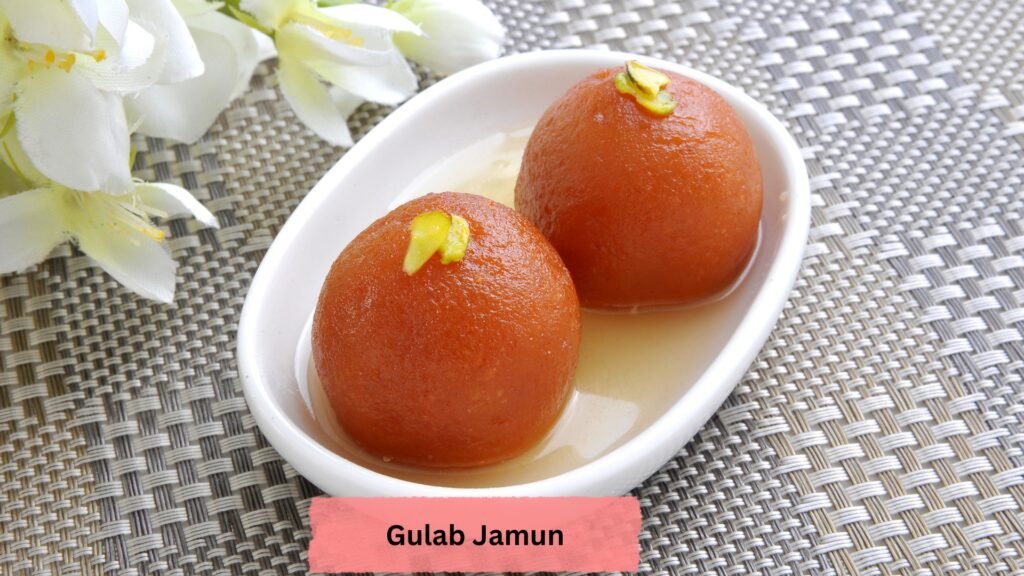
Gulab jamun is a classic Indian dessert made of soft, deep-fried milk solid (khoya) dumplings soaked in a fragrant sugar syrup flavored with cardamom and rose water. The name itself comes from “gulab” (rose, referring to the rose-scented syrup) and “jamun” (a dark purple Indian fruit the dumplings resemble in shape and color).
Where Gulab Jamun Comes From
Gulab jamun’s origins trace back to Persian influence in medieval India, evolving from a fritter called “luqmat al-qadi” that arrived with Persian traders and Mughal cooks. Over centuries it was adapted using khoya, a milk product central to Indian sweet-making, and became a dessert of its own. Today it’s eaten across the entire country and is a fixture at weddings, Diwali, Holi, and pretty much every celebration where something sweet is required, often served warm alongside vanilla ice cream in modern restaurants.
Health Benefits of Milk Solids (Khoya)
- Khoya is a concentrated source of calcium, supporting bone health
- It provides protein from milk solids
- Cardamom in the syrup aids digestion and freshens breath
- Enjoying it in moderation as an occasional treat fits well within a balanced diet
Ingredients:
- 1 cup khoya (mawa), grated
- 1/4 cup milk powder
- 2 tbsp all-purpose flour
- A pinch of baking soda
- 1-2 tbsp milk, as needed to bind
- Ghee or oil, for deep frying
- 1.5 cups sugar
- 1.5 cups water
- 4-5 green cardamom pods, crushed
- 1/2 tsp rose water
- A few saffron strands (optional)
Instructions:
Step 1: Make the syrup
In a saucepan, combine sugar and water, bring to a boil, and simmer for 5-7 minutes until slightly sticky. Add crushed cardamom, rose water, and saffron. Keep the syrup warm.
Step 2: Prepare the dough
Combine khoya, milk powder, and flour with baking soda. Add a little milk at a time and knead gently into a smooth, crack-free dough. Avoid over-kneading.
Step 3: Shape the balls
Divide the dough into small portions and roll into smooth, crack-free balls between your palms, using a little ghee on your hands if needed.
Step 4: Fry on low-medium heat
Heat ghee or oil on low-medium flame. Fry the balls in small batches, stirring gently and constantly so they brown evenly on all sides, until deep golden-brown.
Step 5: Soak in syrup
Transfer the fried balls directly into the warm sugar syrup. Let them soak for at least 1-2 hours so they absorb the syrup and double in size.
You can have it alone or add a scoop of ice cream and enjoy 🙂
Tips:
Frying on low-medium heat is essential – too hot and the outside browns before the inside cooks through, leaving a raw center. Keep your palms lightly greased while shaping to avoid cracks, which cause the balls to break apart in the syrup. Both the syrup and the fried balls should be warm when combined for the best absorption.
For more such quick recipes, visit my YouTube channel @qwikrecipes. If you like the recipe, do like, comment and subscribe.