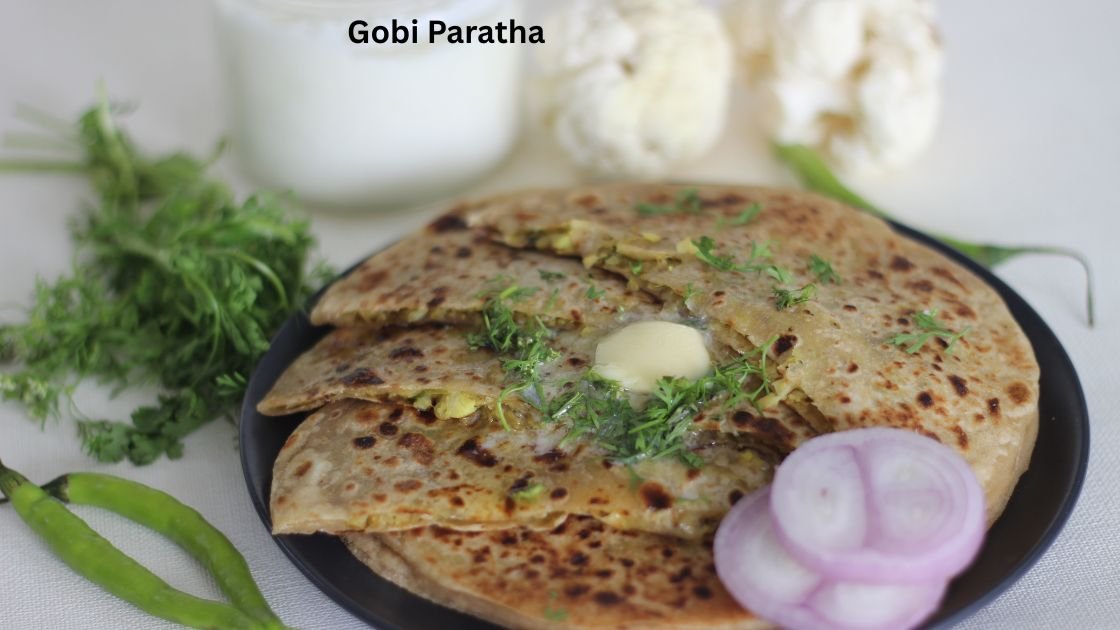
What is Gobi Paratha?
Gobi paratha is a whole wheat flatbread stuffed with a spiced, finely grated cauliflower filling. It is rolled out and pan-fried with ghee or oil until it becomes golden and flaky. Gobi Paratha is heartier than a plain roti but lighter than some of the other stuffed parathas. Cauliflower releases moisture as it cooks rather than adding density the way potato does. Served hot off the tawa with butter on top, it’s a breakfast that keeps you full well into the afternoon.
Where Gobi Paratha Comes From
Gobi paratha belongs to the large family of stuffed parathas from Punjab and Delhi. Alongside aloo paratha and paneer paratha, all of which grew popular through dhabas along North Indian highways and later became breakfast staples in homes across the country. Cauliflower became widely available in Indian markets through the winter growing season. Gobi paratha is especially associated with the cooler months when the vegetable is freshest, crunchiest and least watery. It’s typically eaten for breakfast or a weekend brunch. Perfect dish tiffin boxes for lunch.
Health Benefits of Cauliflower (Gobi)
- Cauliflower is low in calories but high in fiber. Helps with digestion and keeping you full.
- It’s a good source of vitamin C, supporting immunity, and vitamin K, important for bone health.
- Cauliflower contains antioxidants and plant compounds linked to reduced inflammation.
- Because the filling in this recipe is raw-grated and cooked briefly inside the dough, much of its nutrient content is preserved compared to deep-fried preparations.
- Pairing it with whole wheat flour in the paratha adds further fiber, making the meal more filling for longer.
Ingredients:
Dough:
- 2 cups whole wheat flour (atta)
- Water, as needed
- 1/2 teaspoon salt
- 1 teaspoon oil
Filling:
- 2 cups cauliflower, finely grated
- 1 green chili, finely chopped
- 1-inch ginger, grated
- 2 tablespoons fresh coriander, chopped
- 1/2 teaspoon cumin powder
- 1/2 teaspoon garam masala
- 1/4 teaspoon turmeric powder
- 1/4 teaspoon ajwain (carom seeds)
- Salt to taste
Cooking:
- Ghee or oil, as needed
Instructions:
Step 1: Make the dough
Combine whole wheat flour, salt, and oil in a bowl. Gradually add water and knead into a soft, smooth dough. Cover and let it rest for 15-20 minutes.
Step 2: Prepare the filling
Place the grated cauliflower in a clean kitchen towel and squeeze out as much excess water as possible. This is the single most important step to prevent the paratha from tearing. In a bowl, mix the squeezed cauliflower with green chili, ginger, coriander, cumin powder, garam masala, turmeric, ajwain, and salt.
Step 3: Stuff the paratha
Divide the dough into equal balls. Roll one ball into a small round shape, place a generous spoonful of filling in the center, and gather the edges up and over the filling to seal it like a pouch. Gently flatten and roll it out again into a larger paratha, dusting with flour as needed, taking care not to let the filling burst through.
Step 4: Cook on the tawa
Heat a tawa over medium heat. Place the rolled paratha on it and cook for about a minute, until small bubbles appear on the surface. Flip and spread a little ghee or oil on the cooked side.
Step 5: Finish cooking
Flip again, spread ghee on the other side and press gently with a spatula around the edges to help it cook evenly. Cook until both sides are golden brown with crisp spots. Serve it hot.
Tips:
Squeezing out the moisture from the grated cauliflower is non-negotiable; skip it and your dough will tear no matter how carefully you roll. Keep the filling finely grated rather than chopped, since larger pieces poke through the dough more easily. Cook on medium heat rather than high, so the inside has time to cook through before the outside burns.
Dish Preparation Time
20 minutes prep (plus 15-20 minutes dough resting), 20-25 minutes cooking. Makes 6-7 parathas.
Common Mistakes
Not squeezing out the cauliflower’s moisture, leading to soggy, tearing parathas. Over-stuffing the dough ball, which makes rolling difficult. Cooking on too high a flame, which browns the outside before the filling is properly warmed through.
Substitutions
This same technique works well with grated cabbage or a mix of cauliflower and peas. For a gluten-free version, though texture will differ, try a mix of jowar and bajra flour instead of wheat. Use oil instead of ghee for a lighter, vegan-friendly version.
Storage and Reheating
Cooked parathas can be refrigerated for up to 2 days, stacked with parchment paper between them to avoid sticking. Reheat on a hot tawa with a little ghee until warmed through and crisp again. Heating in Microwave will make them chewy rather than crisp.
What to Serve With It
Gobi paratha is traditionally served with white butter or ghee, plain yogurt or raita, and pickle on the side. A cup of masala chai completes the classic North Indian breakfast spread.
Frequently Asked Questions
Why does my paratha burst while rolling?
This almost always means the filling still has too much moisture or the dough covering was too thin at the sealing point.
Can I make the filling ahead of time?
Yes, but squeeze and mix it fresh or refrigerate for no more than a few hours. Please note that the cauliflower can release more water the longer it sits with salt.
Is gobi paratha good for weight watchers?
It’s more nutrient-dense than a plain paratha, but portion size and the amount of ghee used still matter.
Nutrition Information (approximate, per paratha)
Calories: 150-180 kcal | Protein: 4-5g | Carbohydrates: 24-26g | Fat: 5-6g. Values vary based on the amount of ghee or oil used.