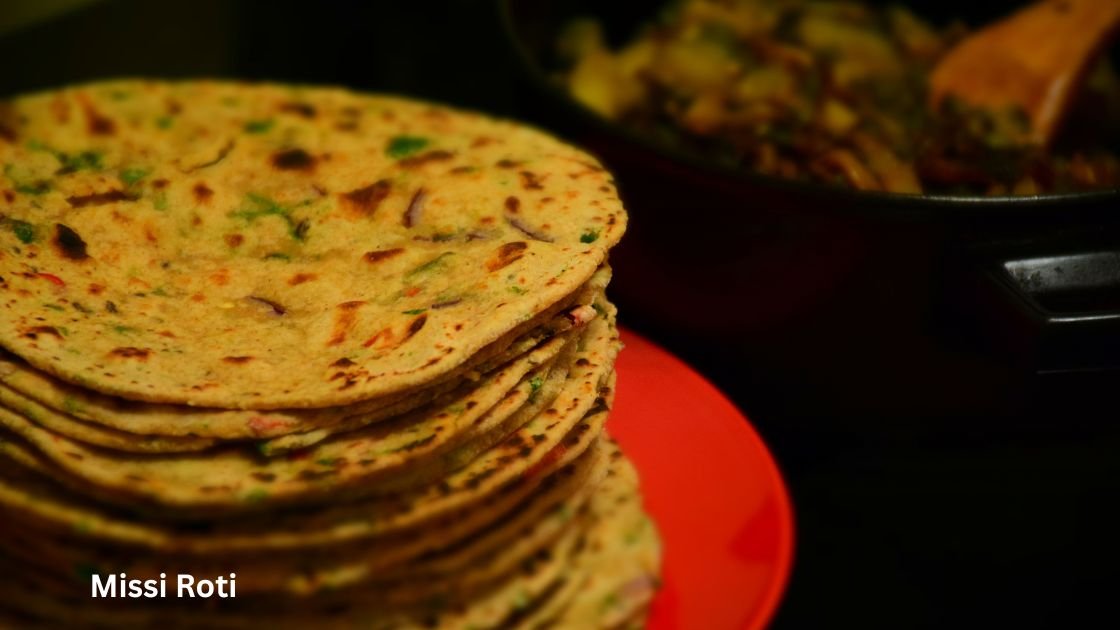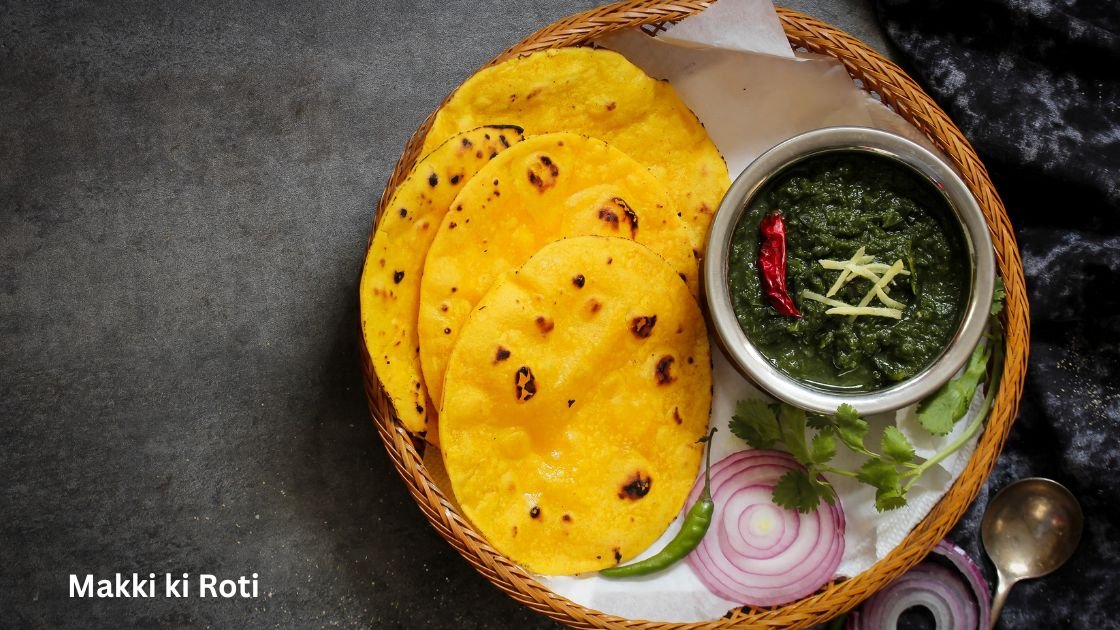
There’s something about the smell of missi roti roasting on a tawa with a spoon of ghee melting into it that instantly takes me back to my grandmother’s kitchen in winter. Unlike soft wheat rotis, missi roti has a coarse, earthy bite from besan (gram flour) mixed with wheat flour, spiced with onions, ajwain, and green chilies. It’s a Punjabi winter staple, usually served with a dollop of white butter and a glass of lassi.
What is Missi Roti?
Missi roti is an unleavened Punjabi flatbread made from a mix of besan (gram flour) and atta (whole wheat flour), flavored with finely chopped onions, green chilies, ajwain (carom seeds), and spices like coriander powder and turmeric. It’s rolled slightly thicker than a regular roti and cooked on a tawa with ghee until crisp-edged and speckled brown. The gram flour gives it a dense, nutty texture and a savory depth that pairs beautifully with tangy pickles and creamy dairy.
Where Missi Roti Comes From
Missi roti traces back to rural Punjab and Rajasthan, where gram flour was a cheap, protein-rich way to stretch wheat flour during lean harvest seasons. It became a fixture of dhaba and farmhouse meals, especially in winter when hearty, warming foods were prized. Old Delhi’s food lanes and Amritsar’s dhabas still serve it the traditional way – slathered with white makhan (butter) and paired with sarson da saag or a bowl of dal.
Health Benefits of Besan (Gram Flour)
Besan is a nutritional powerhouse. It’s naturally gluten-free on its own, high in plant protein and fiber, and has a low glycemic index compared to refined flour. It’s rich in folate, iron, and magnesium, and its fiber content helps slow down sugar absorption, making missi roti a more balanced choice than plain wheat roti for those watching blood sugar. The onions and ajwain add digestive benefits, while ajwain in particular is known to ease bloating and gas.
Ingredients
- 1 cup besan (gram flour)
- 1 cup atta (whole wheat flour)
- 1 small onion, finely chopped
- 1-2 green chilies, finely chopped
- 1 tsp ajwain (carom seeds)
- 1/2 tsp turmeric powder
- 1/2 tsp red chili powder
- 2 tbsp fresh coriander leaves, chopped
- Salt to taste
- Water, as needed to knead
- Ghee or butter, for cooking and serving
Instructions
Step 1: Make the Dough
In a large bowl, mix besan, atta, chopped onion, green chilies, ajwain, turmeric, red chili powder, coriander leaves, and salt. Gradually add water and knead into a firm, slightly stiff dough (firmer than regular roti dough since besan doesn’t have gluten to bind it). Add a teaspoon of oil and knead for another minute until smooth.
Step 2: Rest the Dough
Cover the dough with a damp cloth and let it rest for 15-20 minutes. This allows the besan to hydrate fully and makes rolling much easier.
Step 3: Shape the Rotis
Divide the dough into 6-8 equal balls. Dust with dry flour and roll each ball gently into a roti about 6-7 inches wide and slightly thicker than a normal chapat. Missi roti is traditionally rolled a bit thick to hold its texture. If it cracks at the edges, pinch it back together and continue rolling.
Step 4: Cook on the Tawa
Heat a tawa on medium heat. Place the rolled roti on it and cook until small bubbles appear, then flip. Apply ghee on the cooked side, flip again, and apply ghee on the other side too. Press gently with a spatula and cook both sides until golden-brown spots appear and the roti is cooked through, about 2-3 minutes per side.
Step 5: Serve Hot
Serve missi roti hot off the tawa with a generous dollop of white butter, alongside curd, pickle, or a warming bowl of sarson da saag or dal makhani.
Tips for Perfect Missi Roti
- Keep the dough slightly stiffer than regular roti dough, as besan doesn’t have gluten and softer dough will tear while rolling.
- Roll gently and evenly – pressing too hard can cause the onion pieces to poke through and tear the dough.
- If the dough cracks a lot, add a few more drops of water and knead again.
- Cook on medium heat, not high – besan can turn bitter if it browns too quickly without cooking through.
Prep time: 20 minutes | Rest time: 20 minutes | Cook time: 20 minutes | Yield: 6-8 rotis
Common Mistakes to Avoid
The most common mistake is using too much besan relative to atta, which makes the dough crumbly and hard to roll. Stick to a roughly equal ratio. Another is skipping the resting time, which leads to rotis that tear easily. Cooking on very high heat is a third mistake; it chars the outside while leaving the besan undercooked and slightly raw-tasting inside.
Substitutions
You can swap onions for grated radish (mooli) for a different regional variation, or skip them entirely for a milder roti. Green chilies can be replaced with a pinch of red chili flakes if you prefer less heat while cooking. For a fully gluten-free version, replace the atta with jowar (sorghum) flour, though the texture will be slightly more delicate.
Storage and Reheating
Missi roti is best enjoyed fresh and hot, but leftovers can be stored in an airtight container in the refrigerator for up to 2 days. Reheat on a tawa with a little ghee until warmed through and crisp again. Avoid the microwave, as it makes the roti rubbery.
Serving Suggestions
Missi roti shines alongside sarson da saag, dal makhani, or a simple bowl of curd and pickle. It also makes a great base for a quick roti roll stuffed with paneer bhurji or leftover sabzi, and pairs wonderfully with a tall glass of sweet or salted lassi.
Frequently Asked Questions
Can I make missi roti without onions?
Yes, you can skip onions entirely and just use the spiced besan-atta dough. It will taste milder but still delicious.
Why is my missi roti breaking while rolling?
This usually happens when the dough is too dry or wasn’t rested long enough. Add a splash of water, knead again, and let it rest for at least 15 minutes before rolling.
Is missi roti healthier than regular roti?
Generally yes — the added besan brings more protein and fiber, and a lower glycemic load than roti made purely from wheat flour.
Nutrition Information
Per roti (approximate): 140 calories, 5g protein, 5g fat, 19g carbohydrates, 3g fiber. Values will vary depending on the amount of ghee used during cooking.