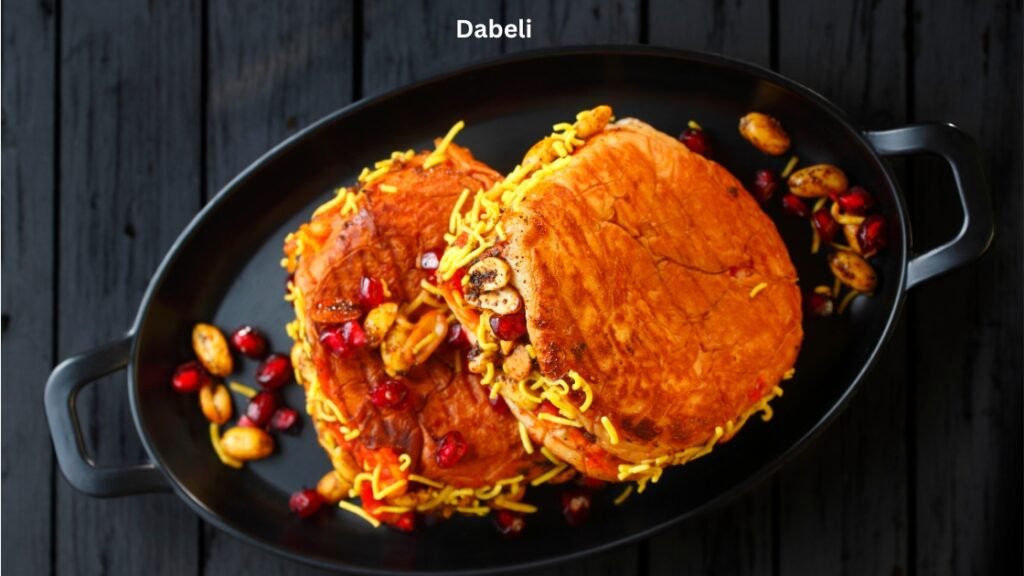
Dabeli is a streetfood which almost every person falls in love with once they have it. It’s sweet, tangy, spicy at the same time. Once you know the recipe you will be surprised that it’s so easy to make it at home.
What is Dabeli?
Dabeli is a popular Gujarati street food snack made of a spiced, tangy-sweet mashed potato filling stuffed inside a soft ladi pav (dinner roll), and finished with a scatter of pomegranate seeds, roasted peanuts, sev, and fresh coriander. The name “dabeli” literally means “pressed” in Gujarati, referring to the way the stuffed bun is pressed on a hot griddle with butter until the edges turn golden and slightly crisp.
Where Dabeli Comes From
Dabeli originated in Mandvi, a small port town in the Kutch region of Gujarat, sometime in the 1960s, and quickly spread across the state before becoming a fixture on street food carts throughout western and central India. It’s traditionally sold as an evening snack, especially around college campuses, railway stations, and busy market corners, often paired with a cup of hot masala chai. Every region has its own tweak on the dabeli masala, but the Kutchi original remains the benchmark.
Health Benefits of Potatoes
- Potatoes are a good source of potassium, which helps regulate blood pressure and supports healthy muscle and nerve function.
- Potatoes provide resistant starch when cooked and cooled, which acts like fiber and supports gut bacteria.
- Potatoes contain vitamin C and B6, both of which support immunity and energy metabolism.
- When boiled rather than fried, they’re a filling, low-fat source of complex carbohydrates.
Ingredients:
- 4 medium potatoes, boiled and mashed
- 2 tablespoons dabeli masala (store-bought or homemade)
- 1 tablespoon tamarind-date chutney, plus more for serving
- 1 tablespoon green chutney (coriander-mint), plus more for serving
- 1 small onion, finely chopped
- 2 tablespoons roasted peanuts
- Juice of half a lemon
- Salt to taste
- 2 tablespoons oil or butter
- 8 ladi pav (soft dinner rolls)
- Butter, for toasting
- Sev (crispy chickpea noodles), for topping
- Pomegranate seeds, for topping
- Fresh coriander leaves, chopped, for topping
- Extra roasted peanuts, for topping
Instructions:
Step 1: Make the filling
Heat oil in a pan, add the chopped onion and saute until soft. Add the mashed potatoes, dabeli masala, tamarind-date chutney, salt, and lemon juice. Mix well and cook for 3-4 minutes until everything comes together into a thick, spiced mixture. Stir in the roasted peanuts and set aside.
Step 2: Assemble the buns
Slit each ladi pav down the middle without cutting all the way through. Spread green chutney on one side and tamarind-date chutney on the other. Stuff generously with the potato filling.
Step 3: Toast and press
Heat a tawa or griddle with a little butter. Place the stuffed buns on the hot griddle and press down gently with a spatula, toasting both sides until golden and slightly crisp, about 1-2 minutes per side.
Step 4: Garnish and serve
Open each bun slightly and top the filling with sev, pomegranate seeds, chopped coriander, and a few more roasted peanuts. Serve immediately while warm.
Tips:
Keep the potato filling slightly wet rather than dry, since it dries out further once stuffed into the bun. Toast the buns just before serving, not in advance, so the sev stays crisp instead of turning soggy. If you can’t find dabeli masala, a mix of chaat masala, red chili powder, and a pinch of garam masala works as a reasonable substitute.
Preparation time: 25 minutes (plus time to boil potatoes)
Common mistakes: Overcooking the filling until it turns dry and crumbly, skipping the tamarind-date chutney which is where most of the signature sweetness comes from, and adding sev too early so it goes limp.
Substitutions: Use burger buns if ladi pav isn’t available. Swap peanuts for roasted chana if you prefer. For a lighter version, skip the butter toasting and serve the buns untoasted.
Storage and reheating: The potato filling keeps in the fridge for up to 2 days in an airtight container. Reheat gently on the stove before assembling. Assembled, garnished dabeli is best eaten fresh and doesn’t store well.
What to serve with it: Hot masala chai or a glass of chilled masala chaas (buttermilk) rounds out the combination of sweet, spicy, and tangy flavors perfectly.
Frequently Asked Questions
Is dabeli spicy? It has a mild to medium heat that’s balanced out by the sweet tamarind-date chutney, so it’s more tangy-sweet than fiery.
Can I make dabeli masala at home? Yes, though the exact spice blend varies by region; a simple mix of coriander, cumin, chili powder, and a touch of jaggery powder gets you close.
Is dabeli vegan? Yes, if you use oil instead of butter for toasting the buns.
Nutrition Information
Per serving (approximate): Calories: 220 | Carbohydrates: 34g | Protein: 5g | Fat: 7g | Fiber: 3g
For more such quick recipes, visit my YouTube channel @qwikrecipes. If you like the recipe, do like, comment and subscribe.