What is Moong Dal Halwa?
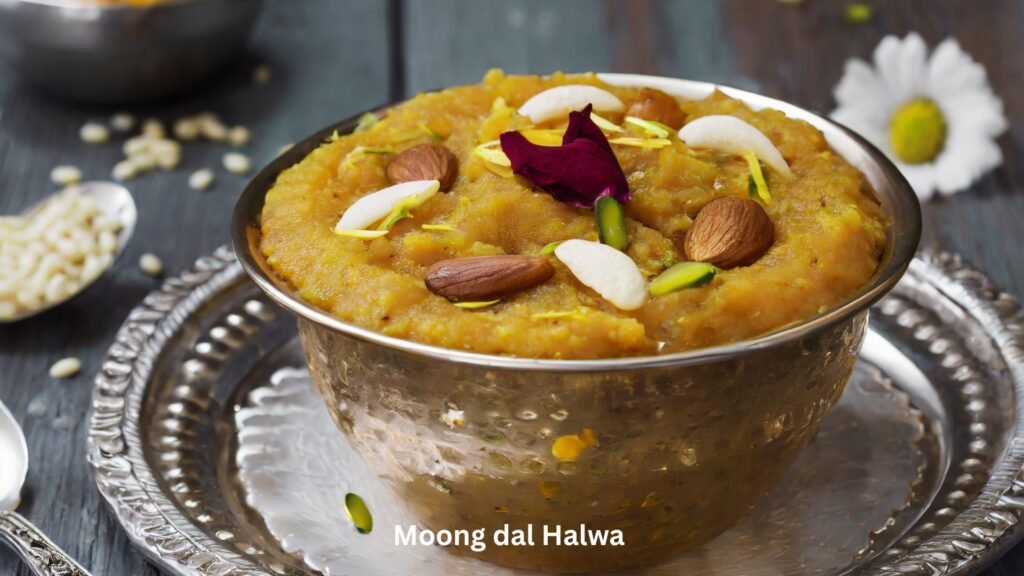
Moong dal halwa is a dense, glossy dessert made by slow-roasting ground split yellow moong dal in ghee until it turns deep golden, then simmering it with milk, sugar, and a generous handful of nuts and saffron until it comes together into a rich, grainy pudding.
Where Moong Dal Halwa Comes From
This halwa is a signature of Rajasthani and Marwari kitchens, where it’s made for weddings, Diwali, and other big celebrations precisely because it takes so much effort. The slow roasting was traditionally a labor of love, often a shared task in the kitchen, and the dessert is still associated with festive occasions and special guests rather than everyday cooking.
Health Benefits of Moong Dal
Split yellow moong dal is one of the lighter, more digestible lentils in the Indian kitchen, and even in a rich dessert like this it brings real nutritional value:
- It’s a good source of plant protein and folate
- Its low glycemic profile means it releases energy more slowly than refined flour-based sweets
- It’s rich in fibre, which supports digestion
- It provides iron and potassium alongside the ghee’s fat-soluble vitamins
Of course, moderation matters here since the ghee and sugar make this an indulgence, but the dal base is what gives the halwa its structure and nutrition.
Ingredients:
- 1 cup split yellow moong dal (dhuli moong dal)
- 1 cup ghee
- 1 cup sugar
- 2 cups full-fat milk
- 1 cup water
- 1/4 teaspoon saffron strands, soaked in warm milk
- 1/2 teaspoon green cardamom powder
- 2 tablespoons chopped almonds and pistachios, for garnish
Instructions:
Step 1: Wash and roast the dal
Wash the moong dal and let it dry completely, then coarsely grind it in a mixer without adding water, so it turns into a slightly grainy, sand-like texture rather than a smooth flour.
Step 2: Slow-roast in ghee
Heat the ghee in a heavy-bottomed pan on low heat and add the ground dal. Stir continuously for 20-25 minutes, breaking up any lumps, until the mixture turns a deep golden-brown and smells nutty and toasted. This is the step that cannot be rushed.
Step 3: Add the milk and water
Once the dal is roasted, carefully add the water and milk (it will bubble up), stirring constantly to avoid lumps. Keep stirring on low heat until the mixture starts to thicken and pull away from the sides of the pan.
Step 4: Sweeten and finish
Add the sugar and soaked saffron, and keep stirring until the sugar dissolves completely and the halwa turns glossy and starts releasing ghee at the edges. Stir in the cardamom powder.
Step 5: Garnish and serve
Transfer to a serving dish and top generously with chopped almonds and pistachios. Serve warm, either on its own or with a small scoop of vanilla ice cream for contrast.
Tips:
Keep the heat low through the entire roasting process as moong dal halwa burns easily on high heat, and once it catches even slightly, the whole batch tastes bitter. If the halwa looks too thick after cooking, stir in a splash of warm milk to loosen it before serving. It also reheats beautifully with a little extra milk or ghee stirred in.
For more such quick recipes, visit my YouTube channel @qwikrecipes. If you like the recipe, do like, comment and subscribe.