If you’ve ever fasted for Navratri, Janmashtami or Ekadashi, chances are makhana has shown up on your plate in some form roasted plain, tossed in a spiced tadka, or simmered into a bowl of kheer. It’s one of those ingredients that quietly does a lot for your health while tasting like a simple, satisfying snack.
What is Makhana?
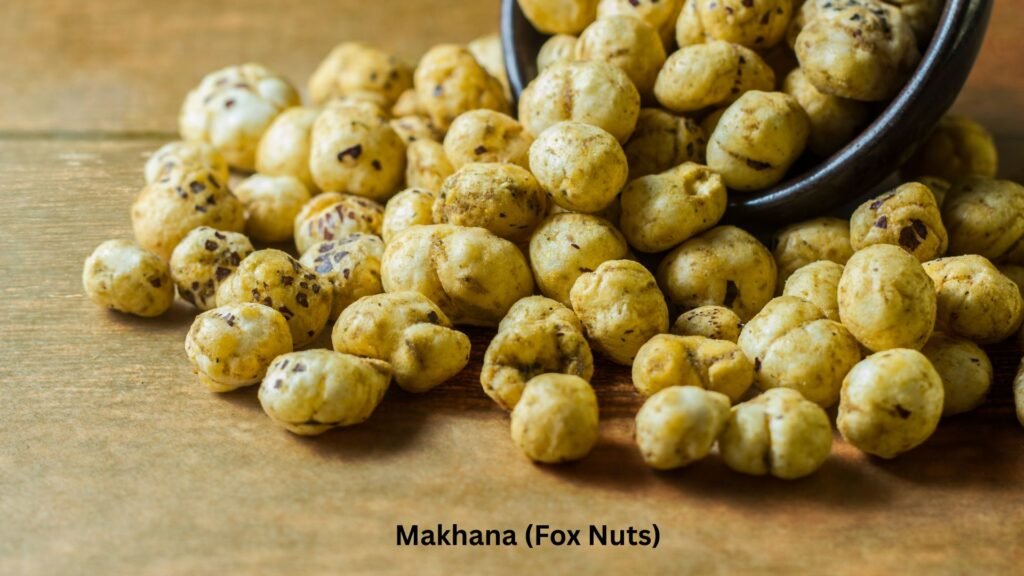
Makhana, also called fox nuts or lotus seeds, are the puffed, popped seeds of the prickly water lily plant. They’re harvested from ponds, cleaned, roasted and then popped much like popcorn, resulting in a light, crunchy, off-white puff that’s used in both savoury and sweet Indian dishes.
Where Makhana Fits in Indian Food Culture
Makhana farming is centred in Bihar, particularly around the Mithila region, which produces the majority of India’s supply. Beyond its culinary use, makhana holds a special place during religious fasting because it’s classified as a phalahari, or fruit-based, food, making it acceptable during vrats when grains are avoided. Over the last few years, it’s also become popular as an everyday healthy snack, roasted with ghee and spices, well beyond its traditional fasting role.
The Real Benefits
- Low in fat and calories, but high in protein and fibre, which makes it genuinely filling.
- Rich in magnesium and potassium, both important for heart and muscle function.
- Has a low glycaemic index, so it’s a smarter snack option for people managing blood sugar.
- Contains antioxidants that may help reduce inflammation.
- Naturally gluten-free, making it suitable for people with gluten sensitivities.
Tips for Using Makhana
- Dry roast makhana in a heavy pan on low heat until crisp before eating or storing, this improves both taste and shelf life.
- Store roasted makhana in an airtight container to keep it crunchy for up to two weeks.
- For a savoury snack, roast makhana in a little ghee with turmeric, chilli powder and rock salt.
- Use crushed makhana in kheer or as a thickener in place of cornflour or rice in fasting dishes.
- Avoid deep frying makhana in large amounts of oil. Dry roasting keeps it light and preserves more of its nutritional value.
Makhana is a good reminder that some of the healthiest snacks are the ones that have been in Indian kitchens for generations. The next time you’re stocking up for a fast or just want a satisfying evening snack, A bowl of roasted makhana is hard to beat.