What is Til Pitha?
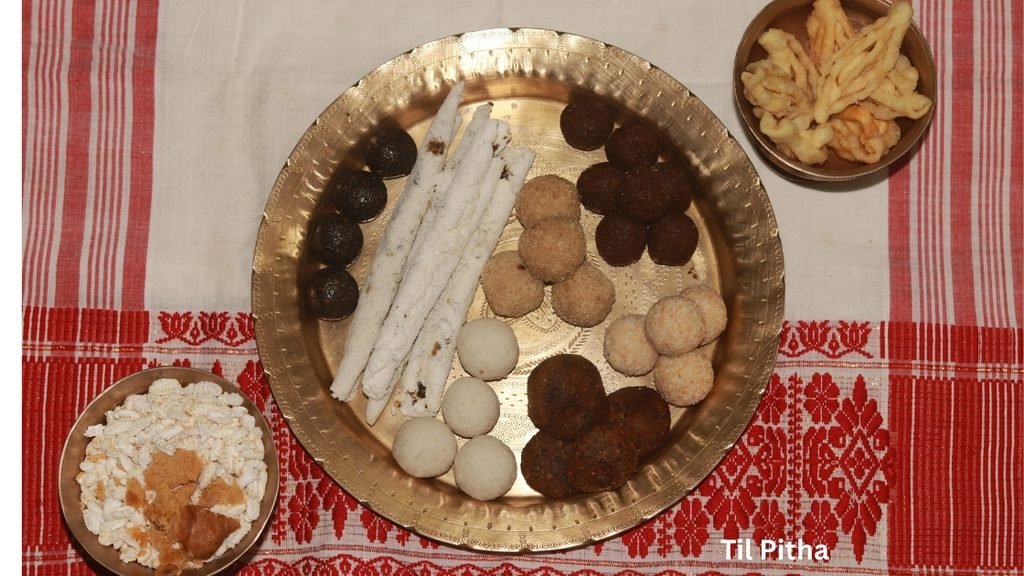
Til pitha is a traditional Assamese sweet made of a thin rice-flour crepe rolled around a filling of roasted sesame seeds (til) and jaggery. It’s one of the most iconic pithas, or rice cakes of Assam are prized for its crisp exterior and sweet, nutty center.
Related reading: Learn more about the health benefits of Sesame Seeds.
Where Til Pitha Comes From
Til pitha comes from Assam in Northeast India. It’s made in nearly every household during Magh Bihu, also called Bhogali Bihu, the harvest festival celebrated in mid-January. Families gather the night before around a bonfire called Meji, and pithas like this one are prepared in large batches to share with neighbors the next morning.
Health Benefits of Sesame Seeds
Sesame seeds, the star ingredient in the filling, are a quiet nutritional powerhouse.
- They’re rich in calcium and magnesium, supporting bone health, especially valuable in winter when sun exposure is lower
- Sesame seeds contain healthy unsaturated fats and lignans that support heart health
- They provide plant-based iron and zinc, both important for immunity during colder months
- Roasting sesame seeds, as this recipe does, makes their oils and minerals easier for the body to absorb
Ingredients:
- 1 cup rice flour, preferably from soaked and ground rice
- 1.5 cups water
- A pinch of salt
- 1 cup white or black sesame seeds
- 3/4 cup jaggery, grated
- 2 tbsp desiccated coconut (optional)
- Ghee or oil for cooking the crepes
Instructions:
Step 1: Make the rice batter
Whisk rice flour with water and a pinch of salt until you get a thin, lump-free batter, similar to a crepe batter. Let it rest for 15-20 minutes.
Step 2: Prepare the sesame-jaggery filling
Dry roast the sesame seeds until fragrant and lightly golden, then cool slightly and grind coarsely with jaggery and coconut, if using, until it clumps together into a sticky, textured filling.
Step 3: Cook the crepe
Heat a flat non-stick pan or griddle, lightly grease it, and pour a thin layer of the rice batter, swirling to spread it out like a dosa. Cook on low-medium heat until the edges lift and the base turns crisp and lightly golden.
Step 4: Fill and roll
While the crepe is still warm and pliable, spread a line of the sesame-jaggery filling along one edge and roll it up tightly into a cylinder. Press gently to seal.
Step 5: Finish
Let the rolls cool slightly on a wire rack so they crisp up further before serving.
Tips:
Keep the rice batter thin, since a thick batter makes the crepe chewy instead of crisp, which changes the texture of the whole pitha. Work quickly while the crepe is warm, since it becomes harder to roll once it cools and stiffens.
Preparation Time
About 20 minutes of prep, plus batter resting time, and 25-30 minutes of cooking, so roughly 45 minutes to an hour total.
Common Mistakes
Pouring the batter too thick, which prevents the classic crisp texture; grinding the sesame filling into a fine paste instead of leaving some texture; and rolling the crepe after it has cooled and become brittle.
Substitutions
Jaggery can be swapped for brown sugar in a pinch, though the flavor will be less caramel-like. Both white and black sesame seeds work; black sesame gives a slightly more intense, nutty flavor.
Storage and Reheating
Til pitha is best eaten fresh the same day, but leftovers can be kept in an airtight container at room temperature for a day, or refrigerated for up to 3 days. Warm briefly on a dry pan to bring back some crispness before serving.
What to Serve With It
On its own with tea, or alongside other Bihu specialties like laru, coconut or til laddoos.
Frequently Asked Questions
Can I make til pitha without a griddle?
A flat non-stick pan works just as well as a traditional tawa.
Is til pitha gluten-free?
Yes, since it’s made purely from rice flour.
Why did my crepe tear while rolling?
The rice batter was likely too thick, or the crepe was left to cook too long and became too dry to roll.
Nutrition Information
Each til pitha roll provides roughly 90-110 calories, with a good share of that coming from the healthy fats and minerals in sesame seeds, plus quick energy from jaggery and rice flour.