What is the Gut Health Trend, Really?
Gut health refers to the balance of bacteria living in your digestive system. A growing body of research links a healthy gut microbiome to better digestion, stronger immunity and even mood regulation. The current wellness conversation around “probiotics” and “fermented foods” isn’t new information so much as a rediscovery of practices that have quietly existed in Indian kitchens for generations, just without the label.
Where This Fits in Indian Food Culture
Fermentation has always been a practical, everyday part of Indian cooking rather than a specialty diet trend. Idli and dosa batter ferments overnight using naturally occurring wild yeasts and bacteria. Curd is set fresh daily in most Indian households. Kanji, a tangy fermented drink made from black carrots or beetroot with mustard seeds, is a North Indian winter staple. Dhokla batter, certain pickle brines and even some regional rice-based drinks like panta bhat in Bengal all rely on the same basic principle: letting good bacteria do some of the digestive work before the food even reaches your plate.
The Real Benefits
- Fermented foods introduce live beneficial bacteria (probiotics) that can help balance the gut microbiome over time.
- Fermentation partially breaks down starches and proteins beforehand which can make foods like dosa batter or dhokla batter easier to digest than their unfermented counterparts.
- Regular consumption of fermented foods like curd and kanji has traditionally been associated with reduced bloating and more comfortable digestion after meals.
- Fermentation increases the bioavailability of certain nutrients, meaning your body can absorb them more efficiently.
- Foods like kanji, made with mustard seeds, add a mild antioxidant boost alongside their probiotic content.
How To Bring More Fermented Foods Into Your Day?
- Start your morning with a bowl of fresh, homemade curd instead of a store-bought flavored yogurt with added sugar.
- Make kanji at home during the cooler months using black carrots or beets, mustard seeds and water. Leave it to ferment for 3-4 days in a warm spot.
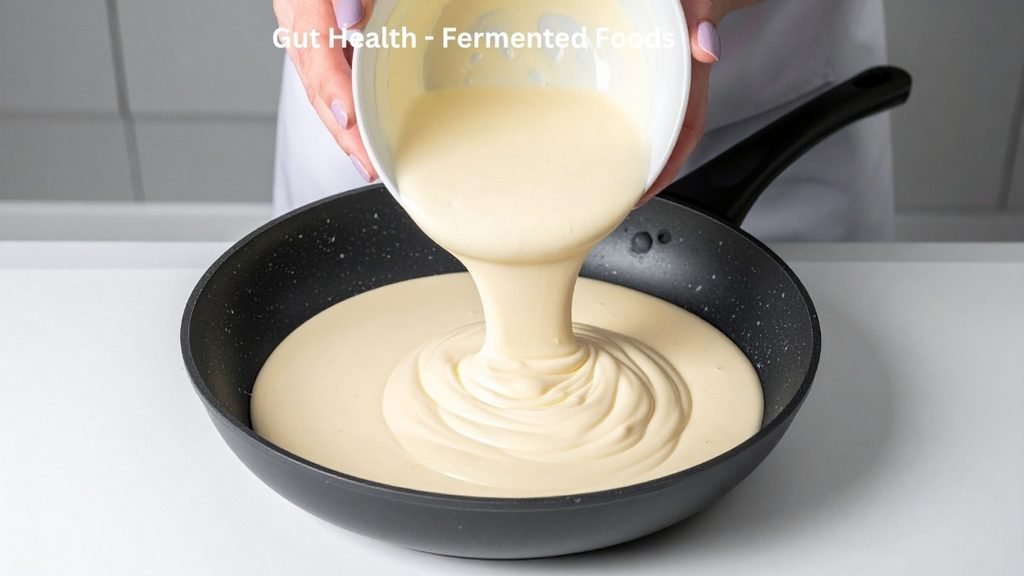
- Let idli or dosa batter ferment for the full 8-10 hours rather than rushing it in a warm oven, as a fully fermented batter is both tangier and easier to digest.
- Keep a small jar of pickle brine-based accompaniments as regular side dishes rather than occasional treats.
- Avoid over-heating fermented foods, since high heat can kill off some of the beneficial live bacteria; add curd or buttermilk to dishes off the direct heat where possible.
Bringing It Back to the Everyday Table
You don’t need a specialty probiotic supplement to support your gut health if your kitchen already has curd, kanji or a batch of fermenting dosa batter in it. The real shift is simply paying attention to what’s already there. Letting these traditional processes run their natural course instead of skipping steps for convenience and making room for a small serving of something fermented at most meals.