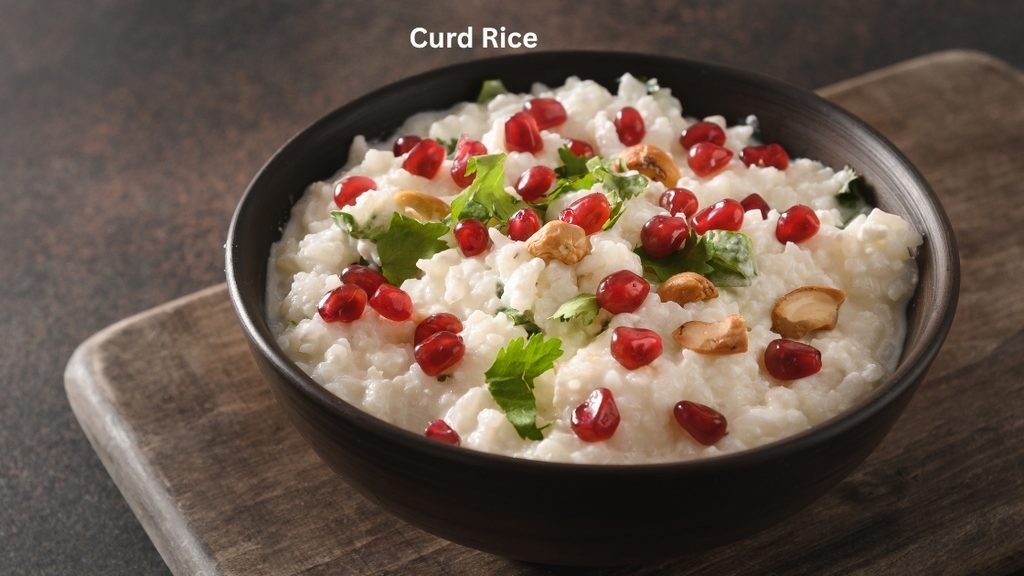
What is Curd Rice?
Curd rice or thayir sadam, is cooked rice mashed with thick yogurt and milk until creamy it is then finished with a mustard-curry leaf tempering and sometimes a scatter of pomegranate or grapes. It’s mild, cooling and endlessly comforting. It’s the kind of dish that asks for nothing more than a pickle on the side.
Where Curd Rice Comes From?
Curd rice is a staple across South India, especially Tamil Nadu, Karnataka and Andhra Pradesh. It traditionally closes out a meal rather than opening it. It’s considered the ideal food for hot weather and is often the last course at a traditional sadya or thali. It is believed to cool the body and aid digestion after a spicy meal.
Health Benefits of Curd (Yogurt)
- Curd is rich in probiotics that support gut health and digestion, especially helpful after a heavy or spicy meal.
- It’s a good source of calcium and protein. It supports bone health in a light, easy-to-digest form.
- Curd has a natural cooling effect on the body which makes it especially suited to hot climates and summer months.
- The combination of rice and curd provides quick, gentle energy without weighing down the stomach.
Ingredients:
- 1 cup cooked rice, cooled
- 1.5 cups thick curd (yogurt)
- 1/4 cup milk
- Salt to taste
- 1 tbsp oil or ghee
- 1 tsp mustard seeds
- 1 tsp urad dal
- 1 dried red chilli
- 8-10 curry leaves
- 1 tsp grated ginger
- 1 green chilli, finely chopped
- A few pomegranate seeds or grapes, for garnish (optional)
- Fresh coriander leaves, chopped
Instructions:
Step 1: Mash the rice
While the rice is still warm, mash it lightly with a spoon or your hands until soft and slightly broken, not fully smooth.
Step 2: Add curd and milk
Once the rice has cooled to room temperature, mix in the curd and milk until you get a soft, creamy consistency. Add salt to taste.
Step 3: Temper the spices
Heat oil or ghee in a small pan, add mustard seeds and urad dal, and let them splutter. Add the dried red chilli, curry leaves, ginger, and green chilli, and sauté for a few seconds.
Step 4: Combine
Pour the tempering over the curd rice and mix well.
Step 5: Garnish and chill
Top with pomegranate seeds or grapes and fresh coriander. Refrigerate for at least 30 minutes before serving for the best flavor.
Tips:
Use slightly overcooked, soft rice rather than firm grains — it blends much better with the curd. If the curd rice thickens too much after chilling, loosen it with a splash of cold milk before serving. Always use fresh, mildly sour curd; overly tangy curd can make the dish taste sharp instead of pleasantly cooling.
Preparation Time:
Prep time: 10 minutes (plus cooling rice). Cook time: 5 minutes. Chilling time: 30 minutes. Total: about 45 minutes.
Common Mistakes:
Mixing curd into hot rice, which curdles it and ruins the texture; using very sour curd, which overwhelms the dish; and skipping the tempering, which is what gives curd rice its signature flavor.
Substitutions:
Dairy-free yogurt works well for a vegan version. Cooked quinoa or millet can replace rice for a different texture and added nutrition.
Storage and Reheating:
Curd rice keeps in the refrigerator for up to 2 days in an airtight container. It’s meant to be eaten cold or at room temperature, so there’s no reheating needed — just give it a stir and add a splash of milk if it’s thickened too much.
What to Serve With It:
A simple mango or lime pickle, papad, or a spoonful of vadu mangai (baby mango pickle) makes curd rice complete.
Frequently Asked Questions:
Can I make curd rice ahead of time? Yes, it actually tastes better after chilling for a few hours as the flavors settle.
Why does my curd rice taste too sour? This usually happens when the curd itself is too tangy; balance it with a little extra milk or a pinch of sugar.
Can I skip the tempering? You can, but the tempering adds essential flavor and texture, so it’s worth the extra two minutes.
Nutrition Information (per serving, approx.):
Calories: 180 | Protein: 6g | Carbohydrates: 28g | Fat: 5g | Fiber: 1g