What is Medu Vada?
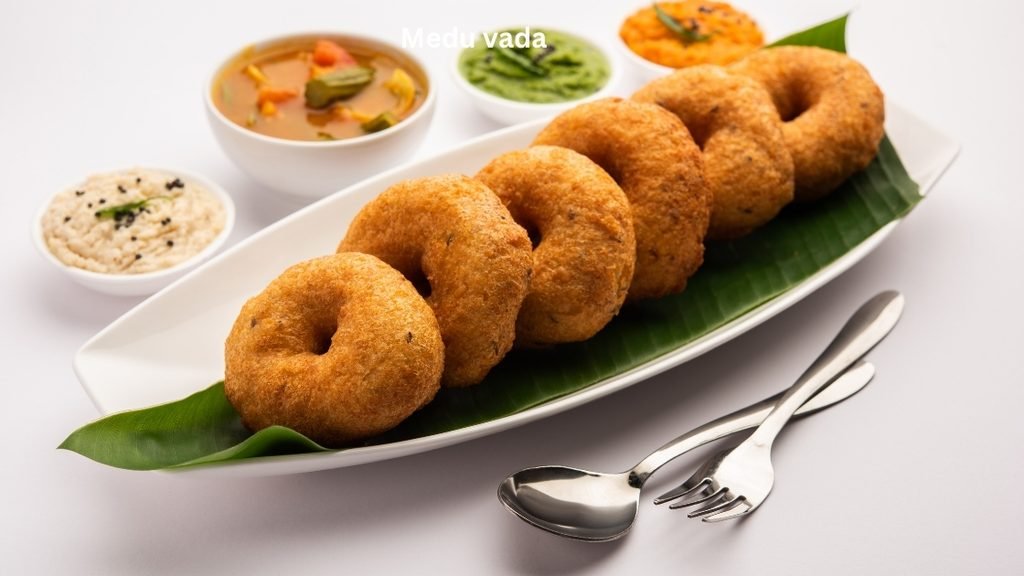
Medu vada is a South Indian dish made from a whipped urad dal (black gram) batter. It’s shaped into a ring or donut, and deep-fried until golden and crisp on the outside and soft inside. The name comes from the Kannada word “medu,” meaning soft. It’s usually served with coconut chutney and hot sambar as part of a South Indian breakfast or tiffin dish.
Where Medu Vada Comes From?
Medu vada has deep roots across Tamil Nadu, Karnataka, Andhra Pradesh and Kerala. It goes by different names: ulundu vadai in Tamil, uddina vade in Kannada and garelu in Telugu. It has long been served as prasadam in South Indian temples. Because it’s traditionally made without onion or garlic, and it remains a fixture at festivals, weddings and everyday breakfasts alike. Today it’s one of the most recognized South Indian dishes nationwide, usually found on the same plate as idli.
Health Benefits of Urad Dal
Urad dal, the base of medu vada, brings solid nutrition to this fried dish.
- It’s an excellent source of plant-based protein, useful for vegetarians building a balanced diet
- Urad dal is rich in iron and folate, both important for healthy blood formation
- It contains soluble fiber, which supports gut health and slow, steady digestion
- The dal is also a good source of magnesium, which supports muscle and nerve function
Ingredients:
- 1 cup whole white urad dal, soaked for 4-6 hours
- 1-2 green chilies, finely chopped
- 1 inch ginger, finely chopped
- 1 sprig curry leaves, chopped
- 1/4 teaspoon black pepper, crushed (optional)
- A pinch of asafoetida (hing)
- Salt, to taste
- Oil for deep frying
- Water as needed (as little as possible)
Instructions:
Step 1: Grind the batter
Drain the soaked urad dal well and grind it in a mixer with as little water as possible. Stop occasionally to scrape down the sides, until you get a thick, fluffy, light batter. Beat the batter with your hand for a minute to incorporate air. This process makes the vada fluffy.
Step 2: Season the batter
Fold in the chopped green chilies, ginger, curry leaves, crushed pepper, hing and salt. Mix gently to keep the batter airy rather than deflating it.
Step 3: Shape the vadas
Wet your palms with water, take a portion of batter, and pat it into a flat disc on your palm. Make a hole in the center with your finger to create the classic donut shape.
Step 4: Fry until golden
Gently slide each vada into medium-hot oil. Fry on medium heat, turning occasionally until golden brown and crisp on both sides. It should take about 3-4 minutes per batch. Drain on paper towels and serve hot.
Tips:
The batter should be thick enough to hold its shape when a small dollop is dropped into water and floats, which is the classic test for the right consistency. Use as little water as possible while grinding, since a watery batter will absorb too much oil and won’t hold together while frying. Always fry on medium heat so the vada cooks through without browning too fast on the outside.
Preparation Time:
20 minutes prep, plus 4-6 hours soaking and 20 minutes frying. Makes about 12-14 vadas.
Common Mistakes:
- Grinding the batter with too much water which results in flat, oily vadas
- Skipping the hand-beating step, which is what makes the batter light and fluffy
- Frying in oil that isn’t hot enough, causing the vadas to soak up excess oil
Substitutions:
A small handful of soaked chana dal or a spoon of rice flour can be added to the batter for extra crispness.
Storage and Reheating:
Medu vada is best eaten fresh and hot, but leftovers can be refrigerated for a day and reheated in an air fryer or oven at 180°C for 8-10 minutes to restore some crispness. Avoid microwaving, as it makes them rubbery.
What to Serve With It:
Serve hot with coconut chutney, tomato chutney and a bowl of piping hot sambar, or soak them in spiced curd/ yogurt to make dahi vada.
Frequently Asked Questions:
Why did my medu vada absorb too much oil?
This usually means the batter had too much water or the oil wasn’t hot enough when frying.
Can I make the batter ahead of time?
Yes, but grind and beat it fresh if possible. If making ahead, keep it refrigerated and bring it to room temperature before shaping.
Can medu vada be made without deep frying?
Yes, a paniyaram pan or appe pan can be used to make a lower-oil version, though the texture will be softer than deep-fried.
Nutrition Information (per vada, approximate):
Calories: 90-110 kcal | Carbohydrates: 12g | Protein: 4g | Fat: 4g | Fiber: 2g
For more such quick recipes, visit my YouTube channel @qwikrecipes. If you like the recipe, do like, comment and subscribe.