What is Ven Pongal?
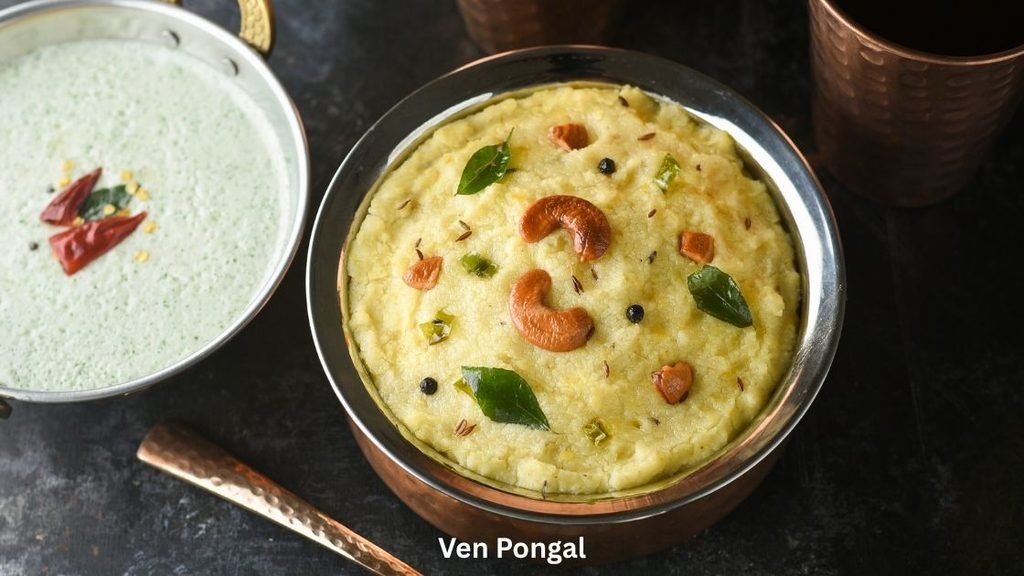
Ven pongal (also called khara pongal) is a savory South Indian breakfast dish made by cooking rice and moong dal together until soft and porridge-like, then tempering it generously with ghee, crushed black pepper, cumin, ginger, curry leaves and fried cashews. “Ven” means white or savory in Tamil, distinguishing it from its sweet cousin, sakkarai pongal which is made with jaggery.
Where Ven Pongal Comes From
Ven pongal is a Tamil Nadu classic which eaten mostly every single day in homes and roadside “mess” breakfast spots across the state. It holds special significance during the harvest festival of Pongal in January, when a sweet version is offered to the sun god. The savory ven pongal we’re making here is pure comfort food. The South Indian answer to a warm bowl of khichdi, usually served alongside coconut chutney and a bowl of sambar.
Health Benefits of Moong Dal
- Moong dal is one of the easiest legumes to digest, which is why it’s a common first food for babies and a go-to during illness recovery in Indian households.
- It’s a good source of plant protein and folate.
- Combined with rice, moong dal forms a complete protein, providing all essential amino acids in one meal.
- Black pepper, the dish’s signature spice, is known to aid digestion and improve nutrient absorption.
- Ginger and cumin in the tempering both support gut health and reduce bloating.
Ingredients:
- 1/2 cup rice (idli rice or any short-grain rice)
- 1/2 cup split yellow moong dal
- 4 cups water
- 3 tablespoons ghee
- 1 teaspoon cumin seeds
- 1 tablespoon whole black peppercorns, coarsely crushed
- 1-inch piece ginger, finely chopped
- 10 to 12 curry leaves
- 2 tablespoons cashews
- Salt to taste
Instructions:
Step 1: Roast and cook the rice and dal
Dry roast the moong dal in a pan for 2 to 3 minutes until lightly fragrant, this deepens its flavor. Wash the rice and roasted dal together, then pressure cook with 4 cups of water and salt for 4 to 5 whistles, until completely soft and mushy.
Step 2: Mash to the right consistency
Once the pressure releases, open the cooker and mash the rice-dal mixture lightly with a ladle or spoon. Ven pongal should be soft and slightly porridge-like, not separate grains, so don’t skip this step.
Step 3: Prepare the tempering
In a small pan, heat ghee. Add cashews and fry until golden, then remove and set aside. In the same ghee, add cumin seeds, crushed black pepper, chopped ginger, and curry leaves, and sauté for 30 to 40 seconds until aromatic.
Step 4: Combine and finish
Pour the tempering over the cooked rice-dal mixture and mix well. Add the fried cashews and a final drizzle of ghee for richness. Add a splash of hot water if the pongal feels too thick.
Step 5: Serve hot
Serve immediately while hot, since pongal thickens considerably as it cools.
Tips:
Roasting the dal before cooking is what gives ven pongal its distinct nutty flavor; don’t skip it. Use freshly crushed black pepper rather than pre-ground pepper powder for a sharper, more authentic bite. Ghee is not optional here; it’s what makes this dish rich and glossy.
Preparation Time
Prep time: 10 minutes. Cook time: 20 minutes. Total time: 30 minutes. Serves 2 to 3.
Common Mistakes
Using too little water (the pongal turns dense and gluey instead of soft), skipping the dal roasting step (flattens the flavor), and adding pre-ground pepper instead of freshly crushed (loses the sharp, punchy heat that defines the dish).
Substitutions
Broken rice or even leftover cooked rice can be used in a pinch, adjusting water accordingly. Toor dal can replace moong dal for a slightly heartier version, though moong dal remains the traditional choice.
Storage and Reheating
Ven pongal is best fresh, but leftovers keep refrigerated for a day. Reheat with a splash of water and extra ghee on the stovetop or in the microwave, stirring well, since it thickens significantly once chilled.
What to Serve With It
Classic pairings are coconut chutney and sambar, though a simple gothsu (tangy brinjal or tomato side dish) also works beautifully.
Frequently Asked Questions
What’s the difference between ven pongal and khichdi?
They’re cousins in spirit; ven pongal uses South Indian tempering with curry leaves, black pepper, and ghee, while khichdi typically uses North Indian spices like turmeric and cumin without the pepper-forward heat.
Can I make ven pongal without a pressure cooker?
Yes, simmer the rice and dal in a covered pot with extra water for 25 to 30 minutes, stirring occasionally, until soft.
Is ven pongal healthy?
Yes, it’s a balanced, easily digestible combination of grain and lentil protein, though it is rich in ghee, so portion size matters if you’re watching fat intake.
Nutrition Information
Approximate values per serving: Calories 320, Carbohydrates 45g, Protein 9g, Fat 12g, Fiber 3g. Values vary based on the amount of ghee used.