What is Sharad Ritu?
In the Ayurvedic calendar, the year is divided into six ritus (seasons). Sharad Ritu is the early autumn season, roughly spanning September to October, that follows the monsoon (Varsha Ritu). It’s considered a transitional season where the body shifts from the cool, damp accumulation of monsoon into a hotter, sharper phase. Ayurveda treats this shift as a time when pitta dosha (the body’s fire and heat energy) comes back into balance. It is important to adjust your diet and routine so it doesn’t flare up.
Where This Fits Into Indian Food Culture
This isn’t an abstract concept confined to old texts. It shows up in everyday Indian eating habits even among people who’ve never heard the word “Sharad Ritu”. You get an instinct to eat lighter, cooling foods as summer humidity breaks, to favor fresh seasonal fruit over heavy fried snacks. It is essentially Ayurvedic seasonal wisdom passed down without the label attached. Many regional harvest and post-monsoon festivals, including Onam and the early days of Navratri fasting fall right in this window too. It reinforces lighter and more deliberate eating.
The Real Benefits of Eating Seasonally in Sharad Ritu
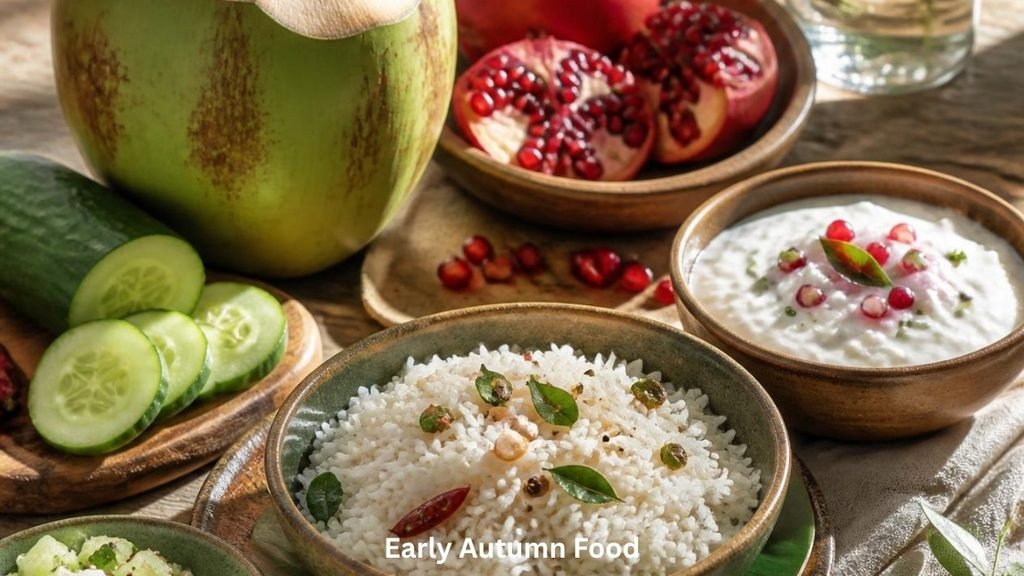
- Favoring cooling, pitta-pacifying foods like cucumber, pomegranate, coconut water, and rice-based dishes can help ease the irritability, acidity, and skin flare-ups Ayurveda associates with this transition.
- Reducing fried, sour, and overly spicy food during this window may help settle digestion that’s still adjusting from the heavier monsoon diet.
- To balance pitta, Bitter and astringent tastes found in vegetables like bottle gourd (lauki), ridge gourd and leafy greens is traditionally recommended.
- Staying well hydrated with room-temperature or lightly warm water,is considered gentler on digestion during this shift. Avoid the ice-cold drinks,
- Sweet, ripe seasonal fruits like pomegranate, grapes and pears are favored.
How To Eat Through the Season
- Start meals with something cooling, like a small bowl of curd-based raita or a cucumber salad. Avoid fried starters.
- Cut back gradually on chili and deep-fried snacks rather than eliminating them abruptly.
- Add ghee in moderate amounts. It is considered pitta-pacifying in reasonable quantities. Avoid heavy oils.
- Favor rice and moong dal-based meals, both considered easy to digest and cooling in Ayurvedic food classification.
- Get some morning sunlight. Avoid eating very late at night, since Ayurveda pairs seasonal eating advice with routine, not diet alone.
Frequently Asked Questions
Is Sharad Ritu eating backed by modern nutrition science?
While Ayurvedic dosha theory itself isn’t a scientific framework in the conventional sense, many of its seasonal recommendations, like eating more hydrating, fiber-rich, less fried food as the weather changes, do align with general good nutrition practice.
Do I need to follow this strictly? Not at all; think of it as a gentle seasonal nudge rather than a rulebook. Adjust based on how your own body actually feels.
What foods should I actually reduce right now? Ayurveda generally suggests easing up on sour, salty, and very oily foods during Sharad Ritu, in favor of naturally sweet, cooling, and lightly spiced meals.
Whatever you make of the dosha theory behind it, there’s something genuinely useful in pausing each season and asking what your body actually needs right now. This week, that might simply mean swapping one fried snack for a bowl of fresh pomegranate, and seeing how that small shift feels.