What is Sama Chawal Khichdi?
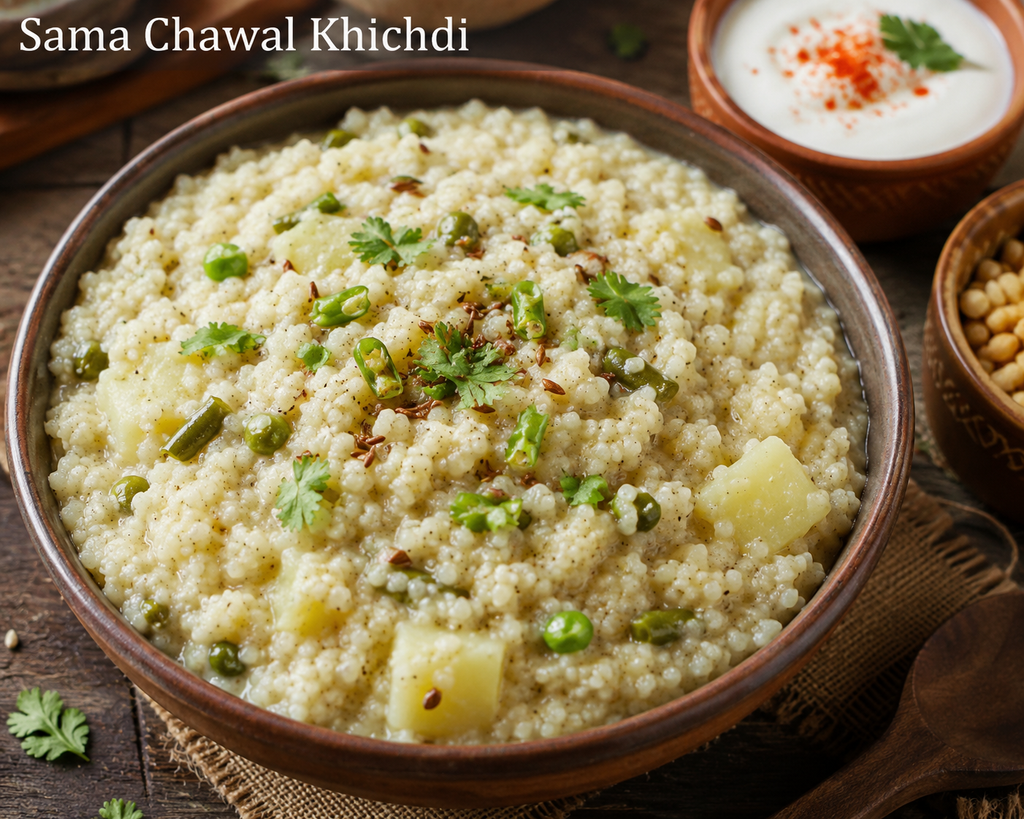
Sama chawal, also called samvat rice or barnyard millet, isn’t rice at all; it’s a tiny, gluten-free millet that has been used in India for fasting for centuries. It’s considered “phalahar” (fruit-like food) permitted during religious fasts. Sama chawal khichdi is a one-pot dish where this millet is cooked soft with cumin, ghee, roasted peanuts, and boiled potato, similar in texture to a light rice khichdi but entirely grain-free by traditional vrat rules.
Where Sama Chawal Khichdi Comes From
This dish is a staple across North and Central India, especially in Uttar Pradesh, Rajasthan, and Madhya Pradesh. It is cooked in nearly every household during Navratri, the nine-night festival honoring Goddess Durga, as well as during Ekadashi and other Hindu fasting days. Because strict vrat rules exclude regular grains, onion and garlic, sama chawal became the go-to substitute that still delivers a filling, rice-like meal without breaking the fast.
Health Benefits of Sama Chawal (Barnyard Millet)
- Sama chawal is naturally gluten-free and easy on digestion, which is exactly why it suits fasting days.
- It has a low glycemic index compared to white rice, making it gentler on blood sugar.
- It’s a good source of fiber, which helps keep you full through a long fasting day.
- It contains iron and B vitamins, useful for maintaining energy while eating a restricted diet.
- Peanuts, the classic tempering ingredient, add plant protein and healthy fats to round out the meal.
Ingredients:
- 1 cup sama chawal (barnyard millet), washed and soaked for 20 minutes
- 2 tablespoons ghee
- 1 teaspoon cumin seeds
- 8 to 10 curry leaves
- 1 green chili, chopped
- 1 medium potato, boiled and cubed
- 2 tablespoons roasted peanuts, coarsely crushed
- 1 teaspoon grated ginger
- Rock salt (sendha namak) to taste
- 2 cups water
- Fresh coriander leaves and lemon juice, to finish
Instructions:
Step 1: Soak and drain the sama chawal
Rinse the sama chawal two to three times until the water runs mostly clear. Soak for 20 minutes, then drain well. This step keeps the grains fluffy instead of mushy.
Step 2: Temper the spices
Heat ghee in a heavy pan or kadai. Add cumin seeds and let them sizzle, then add curry leaves, green chili, and grated ginger. Sauté for 30 seconds until fragrant.
Step 3: Add potato and peanuts
Add the boiled potato cubes and crushed roasted peanuts. Stir gently for a minute so the potato picks up the tempering flavors.
Step 4: Cook the sama chawal
Add the drained sama chawal and rock salt, and stir to coat everything in ghee. Pour in the water, bring to a boil, then cover and simmer on low heat for 8 to 10 minutes, until the millet is soft and has absorbed the water.
Step 5: Rest, garnish, and serve
Turn off the heat and let the khichdi rest, covered, for 5 minutes. Fluff gently with a fork, squeeze over fresh lemon juice, and garnish with coriander leaves before serving hot.
Tips:
Don’t skip soaking the sama chawal; it cooks unevenly and turns gummy without it. Keep the flame low once you add water, since barnyard millet cooks fast and can turn mushy if boiled hard. If cooking for a non-fasting day, a pinch of regular salt and a small onion in the tempering also works well.
Preparation Time
Prep time: 25 minutes (including soaking). Cook time: 15 minutes. Total time: 40 minutes. Serves 2.
Common Mistakes
Skipping the soak (leads to uneven, sticky texture), using too much water (makes it porridge-like instead of fluffy), and overcooking on high heat (the millet turns mushy within minutes once it softens).
Substitutions
Rajgira (amaranth) or kuttu (buckwheat) can be used in a similar preparation for variety across the nine days of Navratri. Sweet potato can replace regular potato. For a non-fasting version, regular salt, onion, and turmeric can be added.
Storage and Reheating
Best eaten fresh, but leftovers keep in the refrigerator for a day. Reheat gently on the stovetop with a splash of water, or in the microwave for 60 to 90 seconds, since sama chawal firms up and can dry out when chilled.
What to Serve With It
Pair with a bowl of vrat-friendly curd (dahi) and a wedge of lemon. It also goes well alongside kuttu ki puri or sabudana vada for a full Navratri thali.
Frequently Asked Questions
Is sama chawal actually a rice?
No, despite the name, it’s a millet, botanically unrelated to rice, which is exactly why it’s allowed during fasts that exclude grains.
Can I make this without ghee for a vegan version?
Yes, use any neutral oil, though ghee gives the traditional flavor.
How do I keep the khichdi from turning sticky?
Rinse the millet well before soaking to remove excess starch, and don’t over-stir once it’s cooking.
Nutrition Information
Approximate values per serving: Calories 260, Carbohydrates 34g, Protein 6g, Fat 11g, Fiber 4g. Values vary based on the amount of ghee and peanuts used.