Every year around Navratri, Most of Indian family kitchens quietly transform: no onion, no garlic, no regular wheat flour, and suddenly sabudana and singhara atta take center stage. If you’ve ever felt confused about what’s actually allowed during vrat season, you’re not alone. It’s less about strict deprivation and more about a specific, well-defined way of eating.
What is the Navratri Vrat Diet?
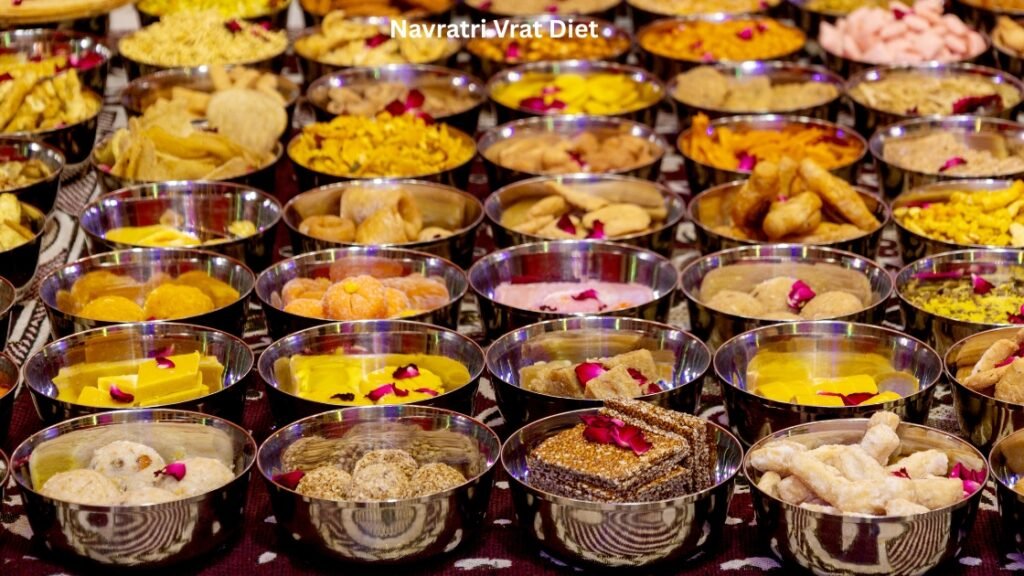
The Navratri vrat (fasting) diet is a set of traditional dietary rules followed during the nine days of Navratri, in which most fasters avoid grains like wheat and rice, along with onion, garlic, and regular table salt, replacing them with specific fasting-friendly ingredients like buckwheat flour (kuttu), water chestnut flour (singhara), sabudana, and rock salt (sendha namak). Some people observe a full fast, eating only fruits and milk, while others follow this modified vrat diet throughout the day.
Where This Fits in Indian Food Culture
Navratri, which typically falls in September or October, is celebrated across India with regional variations in both rituals and food. The vrat diet is rooted in Ayurvedic and religious traditions that treat this period as a time of bodily and spiritual reset, and the specific ingredient restrictions are believed to keep meals light, easily digestible, and free of foods considered heavy in some traditions.
The Real Benefits
- The diet naturally cuts down on refined grains and increases intake of fruits, dairy, and nutrient-dense flours like kuttu and singhara.
- Many vrat-friendly ingredients, like sabudana and potatoes, are easy to digest, which can be gentler on the gut during a period of dietary change.
- Rock salt (sendha namak) is less processed than regular table salt and contains trace minerals.
- The structure of the diet encourages mindful eating and portion awareness, since meals are more deliberately planned.
- Fruits and nuts, staples of the vrat diet, provide natural sugars, fiber, and healthy fats that keep energy levels steady.
How To Eat Well During Navratri Vrat
- Stock up on kuttu (buckwheat) flour, singhara (water chestnut) flour, sabudana (sago), rajgira (amaranth), and makhana (fox nuts) ahead of time.
- Balance heavier fried vrat snacks, like sabudana vada, with lighter options such as fruit chaat or roasted makhana.
- Use sendha namak (rock salt) in place of regular salt in all vrat cooking.
- Stay hydrated with coconut water, buttermilk, or fruit-based drinks, especially if you’re observing a stricter fast.
- Don’t skip meals entirely; smaller, more frequent vrat-friendly meals help maintain energy through the nine days.
Whether you’re observing a strict fast or a modified vrat diet, the nine days of Navratri offer a good excuse to reset eating habits and rediscover ingredients like kuttu and singhara that often sit unused the rest of the year. Planning your vrat meals a little in advance makes the whole period feel a lot less restrictive and a lot more enjoyable.