What is Masala Dosa?
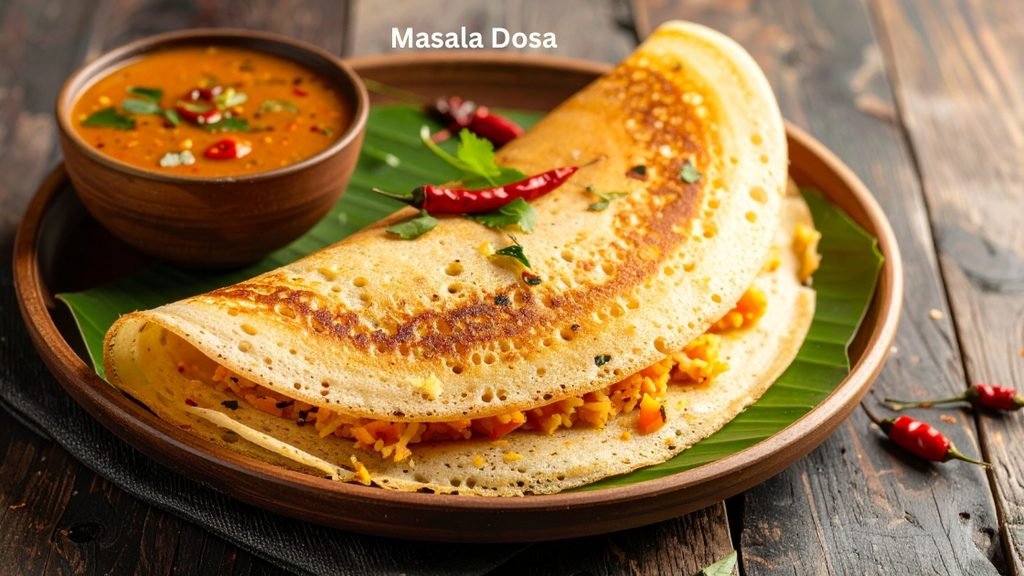
Masala dosa is a large, paper-thin, golden-brown crepe made from a fermented batter of rice and urad dal (split black gram), rolled or folded around a filling of lightly spiced mashed potatoes. It’s typically served with coconut chutney and a bowl of hot sambar on the side. The contrast of the crisp, slightly tangy dosa against the soft, turmeric-yellow potato filling is what makes this dish so beloved across India and beyond.
Where Masala Dosa Comes From
Masala dosa originated in South India, with strong roots in present-day Karnataka and Tamil Nadu, and it has since become one of India’s most recognized dishes worldwide. Udupi, a temple town in Karnataka, is widely credited with popularizing the dosa as we know it today through its network of Udupi restaurants that spread across the country from the early 20th century onward. Traditionally eaten for breakfast or as a light evening meal (tiffin), dosa batter is also the base for uttapam and other South Indian tiffin items. In South Indian homes, making dosa batter is practically a ritual, ground fresh, fermented overnight, and used across several meals.
Health Benefits of Fermented Rice-Lentil Batter
The fermentation process that gives dosa batter its characteristic tang is also what makes it nutritionally special.
- Fermentation increases the bioavailability of B vitamins, particularly B12 precursors and folate, making nutrients easier for your body to absorb.
- Urad dal is a good source of plant protein and iron, which balances the carbohydrate-heavy rice.
- The natural fermentation process introduces beneficial bacteria that support gut health, similar to other fermented foods like curd and idli batter.
- Dosas are naturally gluten-free, making them a great option for those avoiding wheat.
- The potato filling, when made with minimal oil, adds potassium and vitamin C to the meal.
Ingredients:
For the dosa batter:
- 3 cups idli rice (or a mix of parboiled and regular rice)
- 1 cup urad dal (split black gram, skinned)
- 1/2 teaspoon fenugreek (methi) seeds
- Salt to taste
- Water as needed
- Oil or ghee, for cooking
For the potato filling (masala):
- 4 medium potatoes, boiled and roughly mashed
- 1 tablespoon oil
- 1 teaspoon mustard seeds
- 1 teaspoon urad dal
- A pinch of hing (asafoetida)
- 8-10 curry leaves
- 1 green chilli, slit
- 1 onion, thinly sliced
- 1/2 teaspoon turmeric powder
- Salt to taste
- Fresh coriander leaves, chopped
Instructions:
Step 1: Soak the rice and dal
Wash and soak the rice separately from the urad dal and fenugreek seeds for 4-6 hours, or overnight for best results.
Step 2: Grind the batter
Grind the urad dal and fenugreek first until light and fluffy, adding water gradually. Then grind the rice to a slightly coarse, smooth paste. Combine both, add salt, and mix well with your hand (this helps fermentation).
Step 3: Ferment
Cover the batter and let it ferment in a warm place for 8-12 hours, or until it has risen and looks bubbly and light.
Step 4: Make the potato masala
Heat oil in a pan, add mustard seeds and let them splutter. Add urad dal, hing, curry leaves, and green chilli. Once the dal turns golden, add onions and saute until translucent. Add turmeric, mashed potatoes, salt, and a splash of water. Mix well and simmer for 5 minutes. Finish with chopped coriander.
Step 5: Cook the dosa
Heat a flat tawa or non-stick griddle on medium-high heat. Sprinkle a few drops of water to check the temperature (it should sizzle and evaporate immediately). Pour a ladle of batter in the center and spread it outward in a thin, circular motion using the back of the ladle.
Step 6: Crisp and fill
Drizzle oil or ghee around the edges. Cook until the base turns golden and crisp, about 1-2 minutes. Place a portion of the potato masala in the center, fold the dosa over, and serve immediately.
Step 5: Cook the dosa
Heat a flat tawa or non-stick griddle on medium-high heat. Sprinkle a few drops of water to check the temperature (it should sizzle and evaporate immediately). Pour a ladle of batter in the center and spread it outward in a thin, circular motion using the back of the ladle.
Step 6: Crisp and fill
Drizzle oil or ghee around the edges. Cook until the base turns golden and crisp, about 1-2 minutes. Place a portion of the potato masala in the center, fold the dosa over, and serve immediately.
Tips:
Use a well-seasoned cast iron tawa or a good non-stick pan for the crispest results. Don’t skip the fermentation step, an under-fermented batter gives you flat, chewy dosas instead of light, crispy ones. If your kitchen is cold, keep the batter in the oven with just the light on, or near a warm appliance. Spread the batter quickly before it starts to cook, working from the center outward in one continuous spiral.
Preparation Time:
Soaking: 4-6 hours | Fermentation: 8-12 hours | Active cooking time: 30-40 minutes
Common Mistakes:
Grinding the batter too smooth without any graininess can make dosas dense rather than crisp. Using cold batter straight from the fridge without bringing it to room temperature first will make it hard to spread. Cooking on low heat leads to pale, soft dosas instead of the classic crisp texture. Overcrowding the tawa with too much oil makes the dosa greasy rather than crisp.
Substitutions:
You can use brown rice for a slightly nuttier, more fibrous version, though the texture will be a little denser. A pinch of baking soda can help beginners get a lighter batter, though traditionalists rely on fermentation alone. For the filling, add peas or grated carrots for extra nutrition.
Storage and Reheating:
Dosa batter keeps well in the refrigerator for 3-4 days, and the flavor actually improves with a day or two of fermentation. The potato masala can be refrigerated for 2 days in an airtight container. Dosas themselves are best eaten fresh and crisp, but leftover cooked dosas can be reheated briefly on a hot tawa to bring back some crispness.
What to Serve With It:
Coconut chutney, tomato chutney, and hot sambar are the classic accompaniments. A cup of South Indian filter coffee alongside makes it a complete, comforting meal.
Frequently Asked Questions:
**Why is my dosa batter not fermenting?** Your kitchen may be too cold. Try placing the batter in a warm spot, or use the oven with the light on for gentle warmth.
**Can I make dosa batter without a wet grinder?** Yes, a high-powered blender works well, just grind in batches and don’t overheat the batter.
**Why does my dosa stick to the pan?** The tawa may not be seasoned properly, or the temperature may be too low. Make sure the pan is well-heated before pouring the batter.
Nutrition Information (per dosa with filling, approximate):
Calories: 180-220 | Protein: 5g | Carbohydrates: 32g | Fat: 5g | Fiber: 3g
For more such quick recipes, visit my YouTube channel @qwikrecipes. If you like the recipe, do like, comment and subscribe.