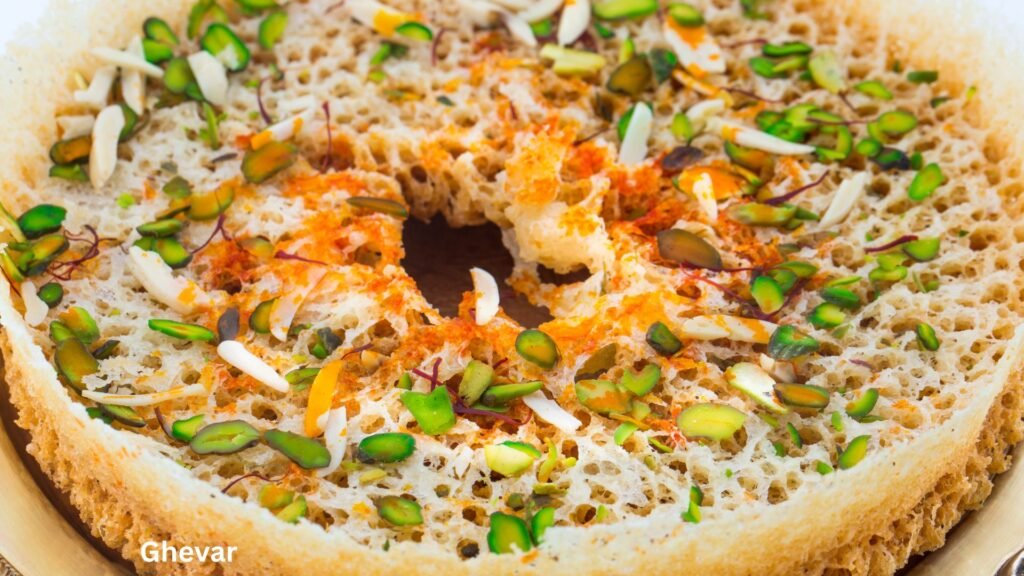
The first time I watched my friend’s mom make ghevar in her Jodhpur kitchen, I was convinced she was doing something wrong. She poured a thin, watery batter into hot ghee a ladle at a time, and it hissed and bubbled into a lacy, honeycombed disc right before my eyes. That mix of nervousness and wonder is exactly how I still feel when I pull out her recipe.
What is Ghevar?
Ghevar is a disc-shaped Rajasthani sweet known for its distinctive honeycomb texture, made by pouring a thin batter of flour, ghee and ice-cold water into hot ghee so it sets into delicate, porous layers. Once fried to a golden crisp, it’s soaked briefly in sugar syrup and finished with a topping of rabdi (thickened sweetened milk), malai or dry fruits. The result is a dessert that’s crisp at the edges, soft in the middle, and rich without being heavy.
Where Ghevar Comes From
Ghevar traces its roots to Rajasthan’s royal kitchens, with food historians linking its name to the Sanskrit ghritapura, meaning ghee-filled cake. It’s most strongly associated with Teej and Gangaur, festivals celebrated by married and unmarried women across Rajasthan to honour Goddess Parvati. During Teej season, ghevar takes centre stage in markets and homes alike, often gifted between families as part of the festivities, alongside mehendi, new clothes and swings decorated for the occasion.
Health Benefits of the Key Ingredients
- Milk and rabdi used in the topping provide calcium and protein.
- Ghee, used in moderation, contains fat-soluble vitamins A, D, E and K and is easier to digest than many refined oils.
- Dry fruits like pistachios and almonds used for garnish add healthy fats, protein and micronutrients.
- Because ghevar is a rich, occasional festival sweet rather than an everyday food, it’s best enjoyed in small portions as part of a balanced diet.
Ingredients:
- 1 cup all-purpose flour (maida)
- 1/4 cup ghee, chilled
- 3/4 to 1 cup ice-cold water (as needed)
- A few ice cubes
- Ghee or oil, for deep frying
- 1 cup sugar
- 1/2 cup water (for syrup)
- 1/2 cup rabdi or sweetened thickened milk, for topping
- Chopped pistachios and almonds, for garnish
- A few strands of saffron (optional)
Instructions:
Step 1: Make the batter
Rub the chilled ghee into the flour with your fingertips until it resembles breadcrumbs. Gradually add ice-cold water, whisking continuously, until you get a thin, watery, lump-free batter. Chill the batter for 15-20 minutes.
Step 2: Prepare the sugar syrup
Heat sugar and water together until the sugar dissolves and you get a one-string consistency syrup. Add saffron if using, and keep the syrup warm.
Step 3: Heat the ghee for frying
Heat ghee or oil in a tall, narrow, heavy-bottomed pot (a traditional ghevar mould works best) until hot.
Step 4: Pour and fry in layers
Pour a small ladle of batter into the centre of the hot ghee. Once it sets and rises, pour another ladle over it, repeating until a tall, porous, honeycombed disc forms. Fry until golden and crisp, then carefully remove and drain.
Step 5: Soak in syrup
Dip the fried ghevar disc into the warm sugar syrup for a few seconds so it absorbs sweetness without turning soggy.
Step 6: Top and serve
Top with rabdi, a sprinkle of chopped pistachios, almonds, and a few saffron strands. Serve fresh the same day for the best texture.
Tips:
Keeping the batter, water and even the mixing bowl ice-cold is the real secret to ghevar’s honeycomb texture, so work quickly once the ghee is hot. Use a tall, narrow vessel rather than a wide pan, since it helps the layers build upward instead of spreading out. Plain fried ghevar without the rabdi topping keeps well for a couple of days in an airtight container; add the rabdi only just before serving.
For more such quick recipes, visit my YouTube channel @qwikrecipes. If you like the recipe, do like, comment and subscribe.