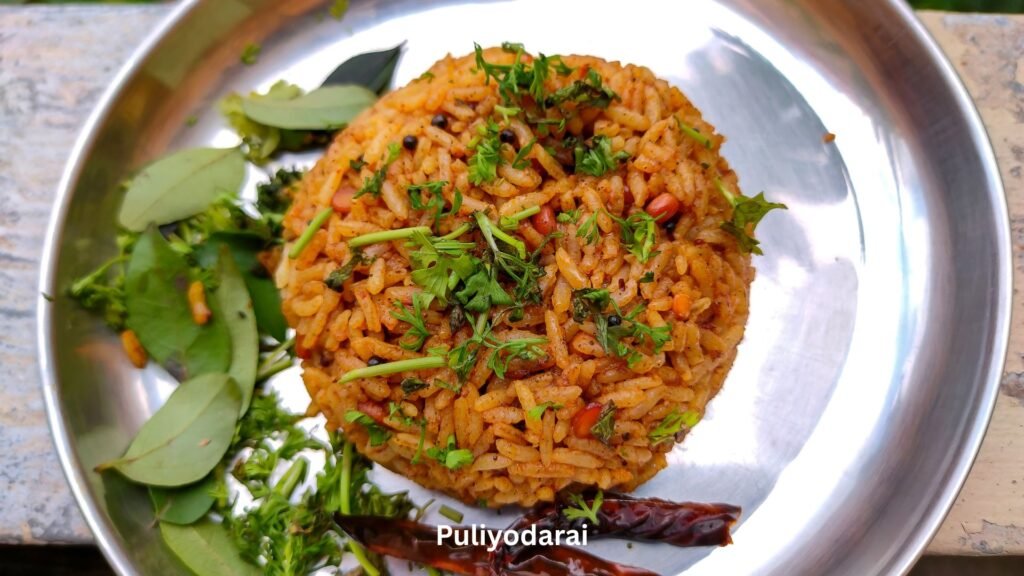
The first time I had puliyodarai was from a temple prasadam plate, wrapped in a banana leaf, and I remember thinking no restaurant version had ever tasted that good. It’s tangy, mildly sweet, deeply savoury all at once, and somehow it only gets better as it sits for a few hours. I always make extra because it travels beautifully for lunch boxes and road trips.
What is Puliyodarai?
Puliyodarai, also called puli sadam or tamarind rice, is a South Indian rice dish flavoured with a thick, spiced tamarind paste and tempered with mustard seeds, curry leaves, peanuts and dried red chillies. The tamarind paste, called puliyodarai kachal, is usually made in a big batch and can be stored, so the rice itself comes together in minutes once you have it ready.
Where Puliyodarai Comes From
Puliyodarai is closely associated with Tamil Nadu, where it is one of the most common temple prasadam dishes, especially at Iyengar temples, because it stays fresh without refrigeration for hours in the South Indian heat. It’s also a fixture of Tamil festive meals and long train journeys, since it tastes just as good, if not better, at room temperature the next day.
Health Benefits of Tamarind
- Tamarind is rich in antioxidants, including polyphenols that help fight cell damage
- It contains tartaric acid, which aids digestion and is traditionally used to relieve constipation
- It’s a good source of magnesium and potassium, both important for heart and muscle function
- Its natural sourness comes with vitamin C, which supports immunity
Ingredients:
For the Tamarind Paste:
- 1 lemon-sized ball of tamarind, soaked and pulped
- 3 tbsp sesame oil
- 2 tbsp peanuts
- 1 tbsp chana dal, 1 tbsp urad dal
- 1 tsp mustard seeds
- 3-4 dried red chillies
- A generous pinch of asafoetida (hing)
- 1-2 sprigs curry leaves
- 1/2 tsp turmeric powder, jaggery and salt to taste
For the Rice:
- 2 cups cooked rice, cooled and separated
- 2 tbsp sesame oil
- 1 tbsp roasted peanuts, for garnish
Instructions:
Step 1: Roast the lentils and spices
Heat 1 tbsp of the sesame oil and roast the peanuts, chana dal and urad dal until golden. Add mustard seeds, dried red chillies, curry leaves and asafoetida, and let them sizzle.
Step 2: Cook the tamarind paste
Add the remaining sesame oil and the tamarind pulp to the pan along with turmeric and salt. Cook on medium-low heat, stirring often, until the raw smell disappears and the mixture thickens into a dark, jam-like paste. Stir in jaggery to balance the sourness.
Step 3: Cool and store the paste
Let the paste cool completely. At this point you can store it in an airtight jar in the fridge for up to two weeks, using it a few tablespoons at a time.
Step 4: Mix with rice
Heat the remaining sesame oil in a large pan, add a few tablespoons of the tamarind paste, and mix in the cooled rice. Toss gently until every grain is coated evenly in the paste.
Step 5: Garnish and serve
Top with roasted peanuts and a few extra curry leaves fried in oil. Serve at room temperature with papad or vathal, or pack it up for lunch.
Tips:
Use rice that’s been cooked and cooled completely, warm or sticky rice will turn mushy when mixed with the paste. Sesame oil (gingelly oil) gives puliyodarai its authentic flavour and also helps it keep longer, so try not to substitute it with a neutral oil if you can help it. Make a double batch of the tamarind paste when you’re at it, it keeps well and makes the next batch of rice a five-minute job.
For more such quick recipes, visit my YouTube channel @qwikrecipes. If you like the recipe, do like, comment and subscribe.