How We Went From Ghee to “Heart-Healthy” Oils and Back Again
If you ask anyone above 60 what they cooked with growing up, chances are the answer is ghee, or maybe mustard oil, groundnut oil, or coconut oil depending on the region. Ask someone in their 30s, and the answer is more likely to be a refined sunflower or soybean oil bottle with a heart symbol printed on the label. Somewhere in between, an entire generation’s relationship with cooking fat changed, and it’s worth understanding why.
Ghee’s Long History in Indian Kitchens
Ghee has been central to Indian cooking and Ayurvedic tradition for thousands of years, used not just for flavour but as a food considered medicinal in its own right good for digestion, for the skin, for joint health, and recommended in Ayurvedic texts for supporting the gut lining. It was the default fat in most households before industrial vegetable oil production existed, alongside regional preferences like mustard oil in the east and north, coconut oil in the south and west coast, and groundnut oil in parts of western India.
The Shift to Refined Oils
Starting in the mid-20th century, and accelerating through the 1980s and 90s, refined vegetable oils entered Indian kitchens aggressively, backed by heavy advertising and a genuine, if somewhat oversimplified, public health message: saturated fat (found in ghee and butter) was bad for the heart, and polyunsaturated refined oils were the “modern,” heart-healthy choice. This message wasn’t entirely baseless – early cardiovascular research did link saturated fat to cholesterol issues but it was applied quite broadly, without much nuance about quantity, quality, or the actual dietary context Indians were eating within.
Refined oils were also cheaper to produce at scale, shelf-stable, and neutral in flavour, making them convenient for the food industry and for households cooking larger quantities. Over a generation, ghee went from an everyday cooking fat to something used more sparingly, often just as a finishing touch rather than the primary cooking medium.
What Newer Research Actually Suggests
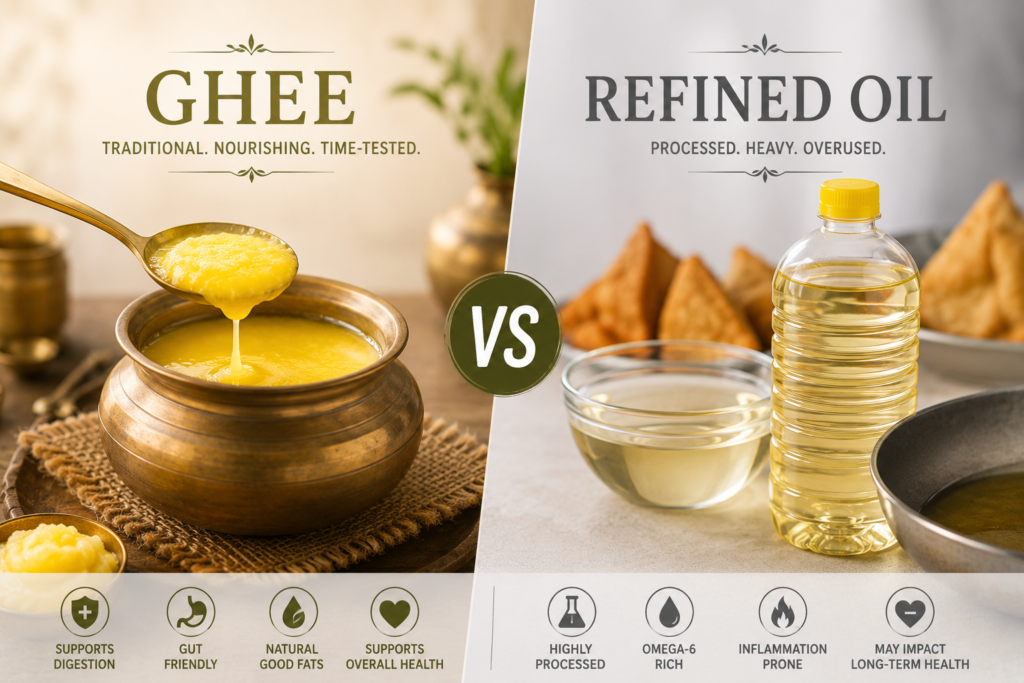
More recent nutrition research has complicated the simple “saturated fat is bad, polyunsaturated oil is good” story. Ghee, consumed in moderate amounts, doesn’t show the negative cardiovascular associations it was once painted with, and some studies point to potential benefits from its butyrate content (a short-chain fatty acid linked to gut health) and its fat-soluble vitamin content (A, D, E, K). Meanwhile, some heavily refined vegetable oils, particularly when reused for frying or exposed to high heat repeatedly, can produce harmful compounds that weren’t part of the original “healthy oil” marketing story.
This doesn’t mean ghee is automatically “better” than all oils, or that refined oil is secretly dangerous and it means the picture is more nuanced than either side of the debate usually admits.
What This Means for How You Cook
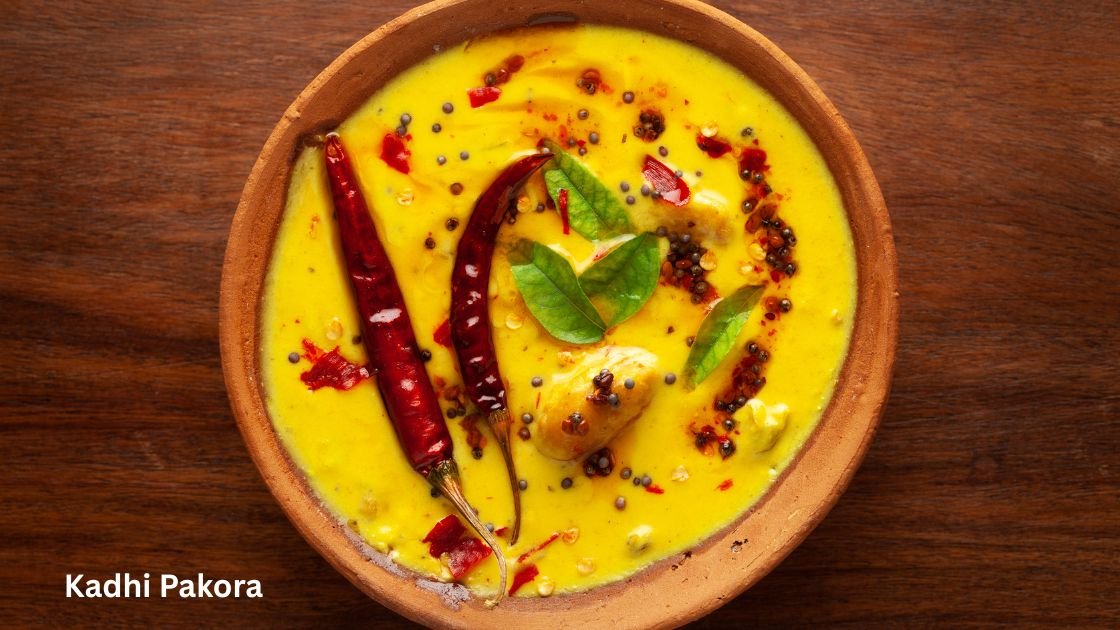
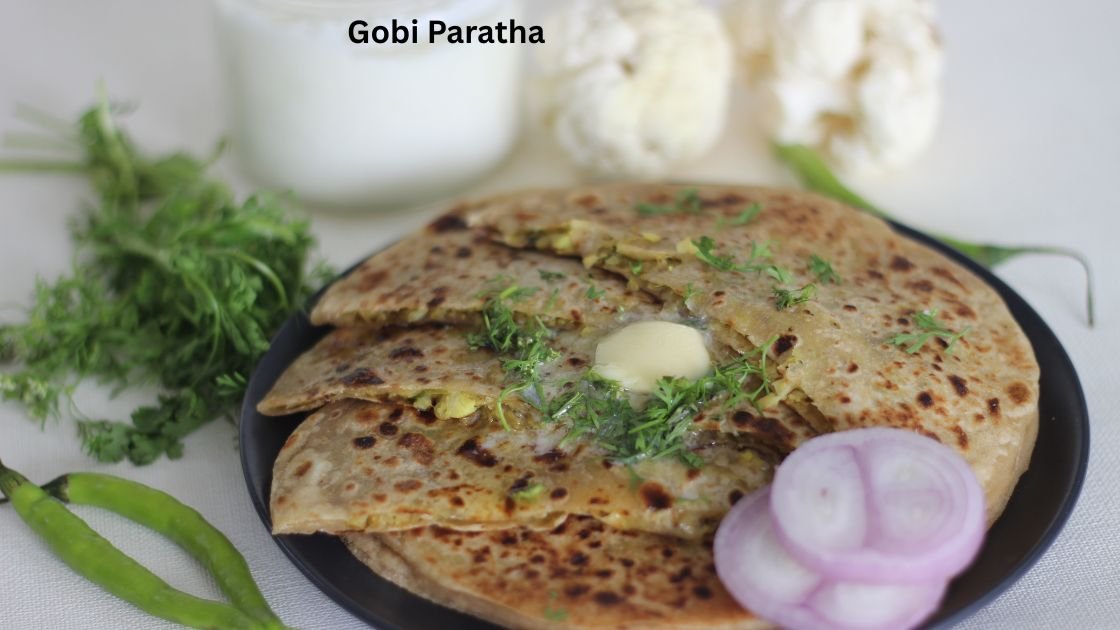
- Ghee works well for tempering (tadka), for finishing dals and sabzis, and for dishes where its flavour genuinely adds something, used in modest, consistent quantities rather than large amounts.
- Cold-pressed, unrefined oils like traditional mustard oil (kachi ghani) or cold-pressed groundnut oil – retain more of their natural nutrients and flavour compounds compared to heavily refined versions, and are worth considering as a middle ground.
- Refined oils are fine for high-heat cooking or frying where flavour neutrality matters, but reusing oil multiple times for deep frying is genuinely worth avoiding, since repeated heating breaks down the oil and can produce harmful compounds.
- Variety matters more than any single “best” fat. Rotating between ghee, mustard oil, and a good quality refined or cold-pressed oil, depending on the dish, is a more balanced approach than committing entirely to one fat source out of fear or trend-chasing.
The Moderation Piece
The actual health issue for most people isn’t which fat they use, it’s how much total fat and how much fried food they’re eating overall. A generous but reasonable use of ghee in home-cooked dal is unlikely to cause harm; a diet built around deep-fried snacks, regardless of which oil is used, will cause problems over time. This is really the part that gets lost in the ghee-versus-oil debate – the bigger variable is usually quantity and cooking method, not brand loyalty to one fat over another.
Coming Back to Balance
What’s happening now, with ghee slowly reclaiming some of its old reputation, isn’t really a rejection of oil so much as a return to balance using the right fat for the right purpose, in reasonable quantities, the way most Indian households actually did before marketing campaigns tried to convince us to pick a single “correct” answer.