What is Rumali Roti?
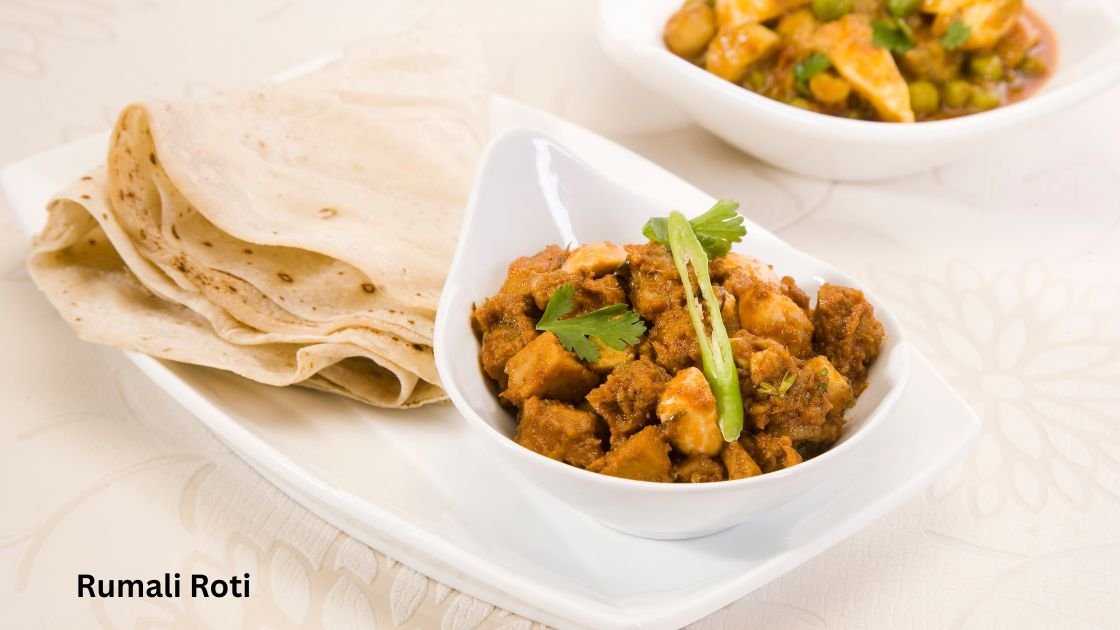
Rumali roti is an ultra-thin, soft Indian flatbread made from a blend of maida and wheat flour. It is stretched and tossed by hand until it becomes paper-thin, then cooked for few seconds on an inverted, dome-shaped griddle called a tava or kadhai. Rumali Roti is typically folded into quarters or rolled up like a napkin before serving. This is the reason it is called Rumali Roti. Its thinness makes it perfect for wrapping around kebabs or tearing off small pieces to scoop up gravies.
Where Rumali Roti Comes From
Rumali roti’s exact origins are debated, with some tracing it to Mughlai and Persian influences in North India, while others link it to Afghan and Central Asian flatbread traditions that entered India through trade and migration. It became a signature offering at Mughlai and Punjabi restaurants across North India, particularly popular alongside tandoori and kebab platters. Today it’s a fixture at Indian restaurants worldwide, often prepared tableside as a bit of culinary showmanship.
Health Benefits and Nutritional Notes
Because rumali roti is rolled so thin, it’s naturally lower in calories per piece than thicker breads like naan or paratha, even though the ingredients are similar. It contains little to no added fat if made without ghee. Which makes it one of the lighter options among Indian breads. Blending in some whole wheat flour, as this recipe does, adds a bit more fiber than an all-maida version.
Ingredients
- 1 cup maida (all-purpose flour)
- 1/2 cup atta (whole wheat flour)
- 1/2 tsp salt
- 1 tbsp oil
- 3/4 to 1 cup water (as needed, to make a very soft dough)
- Extra dry flour, for dusting while rolling
Instructions
Step 1: Make the Dough
Mix maida, atta, and salt in a large bowl. Add oil and rub it in, then gradually add water while kneading. The dough should be much softer than regular roti dough. It should be almost like a soft, pliable ball that springs back when pressed. Knead for 8-10 minutes until smooth.
Step 2: Rest the Dough
Cover the dough with a damp cloth or plastic wrap and let it rest for at least 30 – 60 minutes. This relaxes the gluten and is essential for being able to stretch the dough thin later without it tearing or shrinking back.
Step 3: Roll and Stretch
Divide the dough into 6-8 balls. Roll each one out as thin as you can with a rolling pin, then carefully stretch it further with your hands, draping it over your knuckles like pizza dough, until it’s almost translucent and roughly 10-12 inches wide. Home cooks without professional tossing skills can simply roll it as thin as possible with a pin. Roll it as thinner as possible.
Step 4: Cook Quickly
Heat a large flat tawa (or the back of a wok/kadhai) on medium-high heat. Drape the stretched dough over it and cook for just 20-30 seconds per side — it cooks very fast because it’s so thin. Small bubbles and light brown specks will appear when it’s ready. Do not overcook, or it will turn crisp instead of soft.
Step 5: Fold and Serve
Fold the cooked roti into quarters or roll it up like a handkerchief. Stack folded rotis in a cloth-lined container to keep them warm and soft, and serve immediately alongside kebabs or curries.
Tips for Perfect Rumali Roti
- Keep the dough very soft — softer than you’d think is right — since a stiff dough won’t stretch thin without tearing.
- Rest the dough for as long as possible; even a couple of hours makes stretching noticeably easier.
- Make sure your tawa is very hot before draping the dough on, since a lukewarm surface will make it stick and tear.
- If your kitchen tawa is flat rather than domed, you can still make rumali roti — just roll it thin, drape it gently, and cook briefly on both sides.
Prep time: 15 minutes | Rest time: 30-60 minutes | Cook time: 10 minutes | Yield: 6-8 rotis
Common Mistakes to Avoid
Using a stiff dough is the most common mistake, since rumali roti dough needs to be noticeably softer than regular roti dough to stretch properly. Skipping the resting time is another frequent error that leads to the dough shrinking back every time you try to roll or stretch it. Overcooking is also common. Because the roti is so thin, it needs only seconds per side, and leaving it too long makes it dry and brittle instead of soft.
Substitutions
You can use all maida for an even softer, more pliable roti, or increase the atta ratio slightly for a heartier, more rustic version, though it becomes a little harder to stretch thin. A neutral oil can replace the oil in the dough without changing the result much. If you don’t have a domed tawa, a large flat non-stick pan or the flat side of a griddle works fine with a slightly shorter cook time.
Storage and Reheating
Rumali roti is best eaten fresh and warm, as its thinness means it dries out and turns brittle quickly. If needed, store folded rotis in an airtight container for up to a day and reheat briefly by steaming or wrapping in a damp cloth and microwaving for a few seconds.
Serving Suggestions
Rumali roti is the classic partner for kebabs like seekh or boti, as well as rich gravies such as butter chicken, chicken tikka masala, or paneer makhani. It’s also great for making quick, thin wraps stuffed with grilled meats or paneer and a drizzle of mint chutney.
Frequently Asked Questions
Why is my rumali roti tearing while stretching?
This usually happens when the dough is too stiff or hasn’t rested long enough. Make the dough softer than you think it should be, and let it rest for a full 30-60 minutes before stretching.
Do I need a special pan to make rumali roti?
A domed, inverted tawa is traditional, but a large flat pan or even the underside of a wok works fine at home with a slightly shorter cooking time per side.
Can I make the dough in advance?
Yes, you can refrigerate the kneaded dough for a few hours or overnight in an airtight container. Bring it back to room temperature before rolling and stretching.
Nutrition Information
Per roti (approximate): 90 calories, 2g protein, 2g fat, 16g carbohydrates, 1g fiber. Values are for a plain roti without any butter or ghee brushed on top.