What is Makki di Roti?
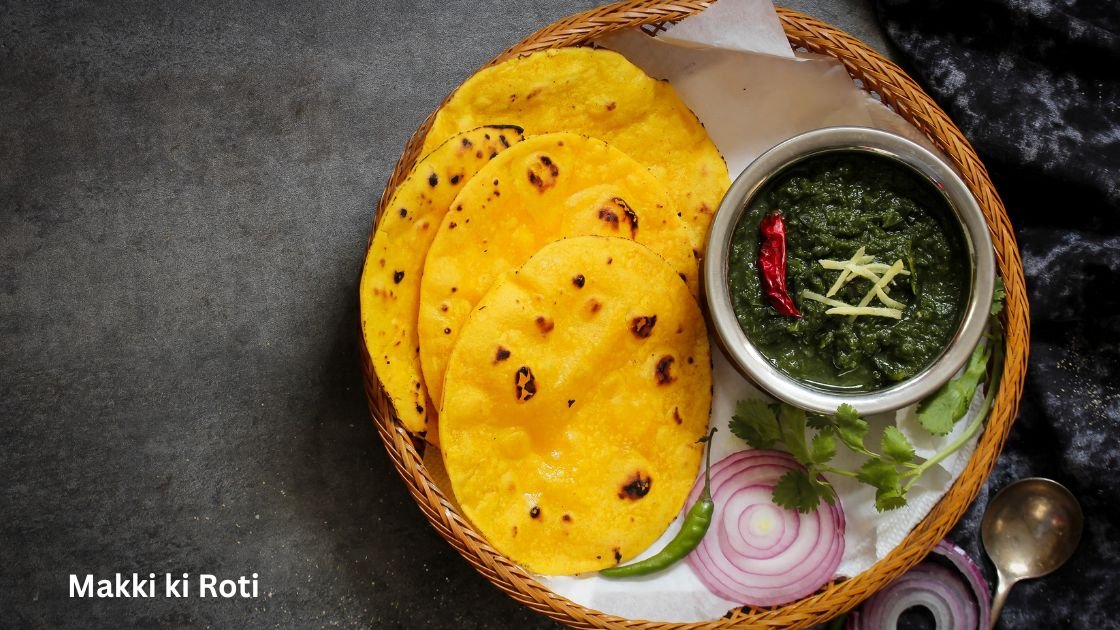
Makki di roti is a traditional Punjabi flatbread made purely from makki ka atta (cornmeal), without any wheat flour. Because corn flour lacks gluten, the dough is soft and slightly crumbly, and the roti is typically patted out by hand between sheets of plastic or banana leaf rather than rolled with a pin. It’s cooked slowly on a tawa until firm, then finished with a generous smear of ghee or white butter. It’s almost always eaten with sarson da saag, forming one of Punjab’s most iconic food pairings.
Where Makki di Roti Comes From
This roti has deep roots in rural Punjab, where corn was a major winter crop long before wheat dominated the region’s fields. Farming families relied on makki di roti with saag as a hearty, warming meal during the cold months, and it remains strongly tied to Punjab’s agrarian identity even today. It’s now a beloved feature on Punjabi restaurant menus across India and abroad, especially in winter specials.
Health Benefits of Makki (Corn Flour)
Corn flour is naturally gluten-free, making makki di roti a great option for those with gluten sensitivities. It’s rich in fiber, which supports digestion, and contains good amounts of vitamin A, vitamin C, and antioxidants like lutein. Corn is also a good source of complex carbohydrates for sustained energy, and pairing it with saag adds iron and folate to the meal, making the combination genuinely well-rounded nutritionally.
Ingredients
- 2 cups makki ka atta (cornmeal)
- 1-1.5 cups hot water (as needed)
- 1/2 tsp salt
- 1 tbsp ghee (optional, for softer dough)
- Extra dry makki atta, for dusting
- Ghee or white butter, for cooking and serving
Instructions
Step 1: Make the Dough
Place the makki atta and salt in a bowl. Slowly add hot water, a little at a time, mixing with a spoon first since it will be too hot to touch. Once cool enough to handle, knead gently into a soft, slightly sticky dough. Adding a tablespoon of ghee helps make the dough more pliable and easier to shape.
Step 2: Rest Briefly
Cover the dough and let it rest for 10 minutes. Unlike wheat dough, it doesn’t need long resting, but this short rest makes it slightly easier to pat into shape.
Step 3: Shape the Roti
Take a small ball of dough and place it between two sheets of greased plastic or parchment paper. Pat it gently with your fingers into a round roti about 5-6 inches wide — rolling with a pin usually causes it to crack, so patting by hand works best. Keep the edges slightly thicker than the center to prevent tearing.
Step 4: Cook on the Tawa
Carefully peel the roti off the plastic and place it onto a hot tawa. Cook on medium heat until the underside firms up, then flip. Apply ghee on the cooked side, flip again, apply ghee on the other side, and press gently with a spatula. Cook until both sides have golden-brown spots and the roti feels firm, about 3-4 minutes per side.
Step 5: Serve Hot
Serve immediately with a generous topping of white butter, alongside sarson da saag and a glass of buttermilk or lassi.
Tips for Perfect Makki di Roti
- Always use hot (not boiling) water to bind the dough — it helps the cornmeal hold together better than cold water.
- Make and cook the roti immediately after shaping, since the dough dries out and cracks if left sitting too long.
- Keep a bowl of water nearby to wet your fingers while patting, which prevents cracking.
- If the roti keeps breaking, mix in a tablespoon or two of wheat flour or boiled mashed potato as a binding agent (a common home cook trick).
Prep time: 15 minutes | Rest time: 10 minutes | Cook time: 20 minutes | Yield: 6-7 rotis
Common Mistakes to Avoid
Using cold water instead of hot is a common mistake that leaves the dough crumbly and impossible to shape. Trying to roll the dough with a rolling pin instead of patting it by hand is another frequent error, since corn flour dough tends to stick and tear under a pin. Letting the shaped roti sit too long before cooking also causes cracking, so always cook it right after shaping.
Substitutions
For a more pliable dough that’s easier for beginners, mix in 1/4 cup wheat flour along with the makki atta — this isn’t traditional but is a common home shortcut. You can also add finely chopped fenugreek leaves or grated radish into the dough for extra flavor and nutrition. Ghee can be swapped for butter or a neutral oil if preferred, though ghee gives the most authentic taste.
Storage and Reheating
Makki di roti is best eaten fresh and hot, as it hardens and becomes brittle once it cools. If you have leftovers, store them in an airtight container for up to a day and reheat directly on a tawa with a little ghee until warm and soft again. It doesn’t freeze or reheat well in the microwave.
Serving Suggestions
The classic pairing is sarson da saag and a dollop of white butter, but makki di roti is equally good with plain curd, jaggery, or a simple potato sabzi. Wash it all down with a glass of lassi or buttermilk for the full traditional Punjabi winter meal experience.
Frequently Asked Questions
Why does my makki di roti keep breaking?
This is usually because the water wasn’t hot enough or the dough is too dry. Use hot water, knead while warm, and pat the roti out gently with wet fingers rather than rolling it with a pin.
Is makki di roti gluten-free?
Yes, when made with pure makki atta and no added wheat flour, it’s naturally gluten-free, making it a good option for those avoiding gluten.
Can I make the dough ahead of time?
It’s best made fresh right before cooking, as the dough dries out and becomes hard to shape if left standing for too long.
Nutrition Information
Per roti (approximate): 120 calories, 3g protein, 3g fat, 21g carbohydrates, 2g fiber. Values increase with the amount of ghee or butter used for cooking and serving.