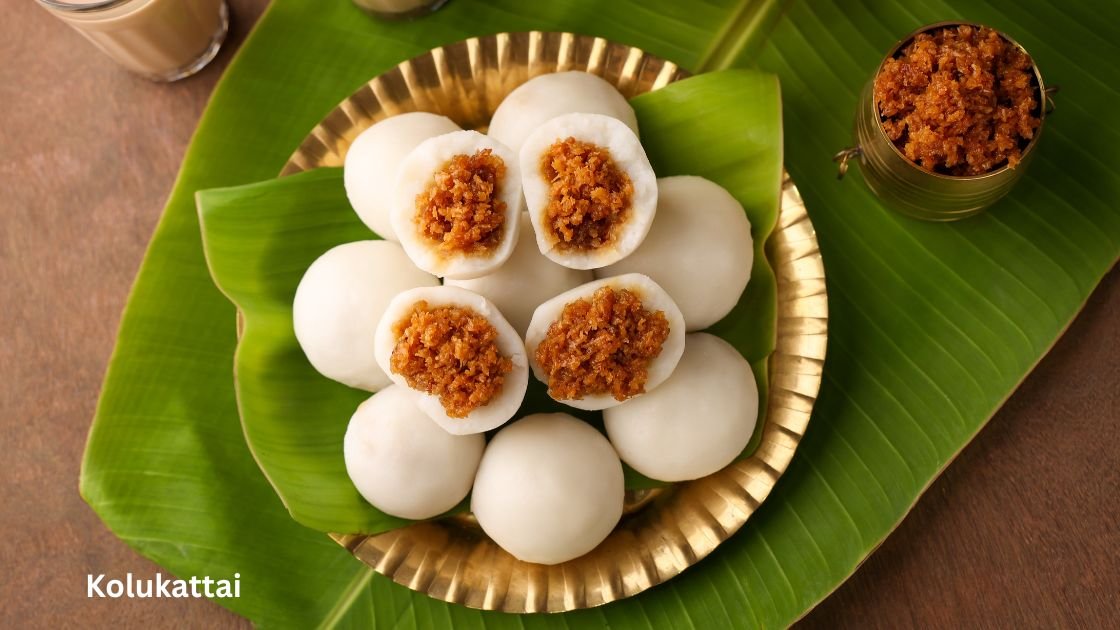
Kolukattai is a steamed rice flour dumpling filled with a sweet coconut and jaggery mixture. It is shaped into a cone with pleated edges pinched by hand. It is essentially the Tamil and broader South Indian cousin of Maharashtra’s modak, made from the same core ingredients but with its own particular shaping technique.
Related reading: Learn more about the health benefits of Jaggery and Coconut.
Where Kolukattai Comes From
Kolukattai is native to Tamil Nadu, though close relatives appear across Karnataka, Andhra Pradesh and Kerala under different names. It is made specifically as an offering to Lord Ganesha during Vinayagar Chaturthi (the Tamil name for Ganesh Chaturthi), since modak and kolukattai-type sweets are considered his favourite food. Savoury steamed versions with lentil or spiced coconut fillings are also made through the year, but the sweet coconut-jaggery version is the one reserved for the festival itself.
Health Benefits of Coconut
Fresh coconut, the star of the filling, brings medium-chain triglycerides that the body can use for quick energy, along with fibre, manganese and small amounts of iron. Paired with jaggery instead of refined sugar, the filling also carries trace minerals like iron and magnesium that plain white sugar does not offer. It is a small but real upgrade for an occasional festive sweet.
Ingredients:
- 1 cup rice flour (idiyappam or store-bought fine rice flour)
- 1 cup water
- 1/2 tsp oil, plus extra for greasing hands
- A pinch of salt
- 1 cup fresh grated coconut
- 3/4 cup grated jaggery
- 1/2 tsp cardamom powder
- 1 tbsp chopped cashews or raisins (optional)
Instructions:
Step 1: Make the filling (pooranam)
Heat a pan on low flame and add the grated jaggery with a splash of water. Once it melts and turns syrup like, add the grated coconut and cook, stirring constantly, until the mixture thickens and pulls away from the pan, about 5 to 7 minutes. Stir in cardamom powder and the nuts or raisins, then set aside to cool completely.
Step 2: Make the outer dough
Bring the water to a boil with the oil and salt. Turn off the heat. Add the rice flour all at once and stir quickly with a spoon until it comes together into a shaggy mass. Cover and let it rest for 5 minutes so the flour fully hydrates.
Step 3: Knead
While the dough is still warm, grease your palms with oil and knead it into a smooth, soft, crack-free ball. This is the step people rush. A smooth dough is what makes clean pleats possible later. Knead until it feels like soft play dough with no dry patches.
Step 4: Shape the kolukattai
Take a small lemon-sized portion of dough and roll it into a ball, then flatten it into a small disc in your palm, thin at the edges and slightly thicker in the centre. Place a spoonful of the coconut-jaggery filling in the middle. Bring the edges up and around the filling, pleating and pinching as you go. Finish it with a small twist at the top to seal it into a cone shape.
Step 5: Steam
Arrange the shaped kolukattai on a greased steamer plate or idli stand, leaving space between each one. Steam over medium heat for 10 to 12 minutes, until the outer shell turns slightly glossy and translucent. Let them cool for a couple of minutes before removing, since they are fragile straight off the steamer.
Tips:
Use the rice flour while the dough is still hot, since it becomes difficult to shape once it cools and stiffens. If you cannot pleat neatly, a simple stuffed ball shape (like a modest gujiya) tastes exactly the same and is much easier for beginners. Keep a damp cloth over the shaped kolukattai while you finish the batch so the dough does not dry out and crack.
Preparation Time
Prep time is about 20 minutes and cook time is around 20 minutes. Plan for roughly 40 minutes total, making about 14 to 16 kolukattai.
Common Mistakes
- Letting the dough cool down before shaping, which makes it crack and refuse to hold pleats
- Overfilling, which causes the dumplings to burst open while steaming
- Cooking the coconut-jaggery filling too dry, which makes the inside crumbly instead of soft and fudgy
- Over-steaming, which can make the outer shell tough rather than soft
Substitutions
Frozen grated coconut works if fresh is not available, just thaw it fully first. Jaggery can be swapped for an equal amount of grated palm sugar for a slightly different but equally traditional flavour. For a quicker version, a rice flour and wheat flour blend (50-50) is easier to work with than pure rice flour.
Storage and Reheating
Kolukattai are best eaten fresh and warm the same day. Leftovers can be refrigerated in an airtight container for up to 2 days. Reheat by steaming for 3 to 4 minutes rather than microwaving, which tends to make the outer shell rubbery.
What to Serve With It
Kolukattai is typically served on its own as prasad after the puja plus filter coffee if you are serving it as an afternoon snack rather than an offering.
Frequently Asked Questions
Can I make kolukattai without a steamer?
Yes, a regular vessel with a tight lid and a small stand or idli plate inside works fine, as long as the dumplings sit above the water line and the lid seals well enough to trap steam.
Why did my kolukattai turn out hard?
This usually means the dough was kneaded after it cooled too much, or the kolukattai were over-steamed. Work with warm dough and keep an eye on the steaming time.
Can I make the dough or filling ahead of time?
The filling can be made a day ahead and refrigerated. The dough, however, is best made fresh right before shaping, since it needs to be warm and pliable to work with.
Nutrition Information (per piece, approximate)
Roughly 90 to 100 calories, 2g protein, 2.5g fat, 17g carbohydrates and 1g fibre per piece, though this varies with size and how generously the filling is packed.