What is Vangi Bath?
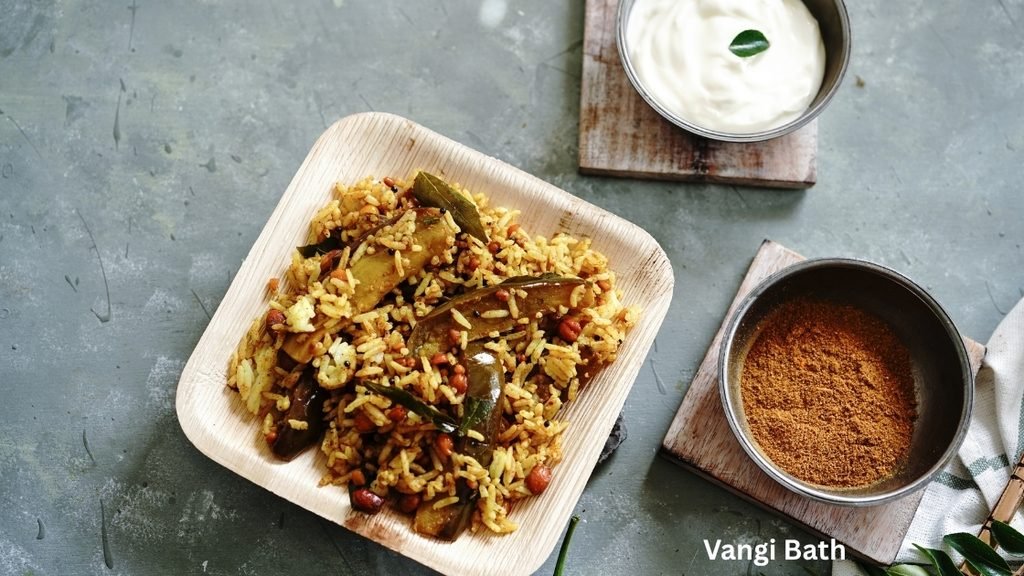
Vangi bath is a South Indian rice dish from Karnataka made by cooking small purple brinjals with rice and a distinctive spice blend called “vangi bath powder”. It’s a roasted mix of lentils, dried red chilies, coriander seeds and warm spices. “Vangi” means brinjal in Kannada, and “bath” refers to a rice dish so the name literally translates to “brinjal rice.” The dish is a fragrant, slightly tangy, mildly spiced rice dish where soft, caramelized brinjal pieces are folded through fluffy rice along with peanuts and curry leaves for crunch and flavour.
Where Vangi Bath Comes From?
Vangi bath hails from Karnataka, where it’s a staple of Kannadiga cuisine alongside other rice dishes like bisi bele bath and puliyogare. It’s especially popular in Bangalore and the Mysore region. It is often prepared for festive lunches, temple prasadam and packed as a satisfying lunchbox meal since it tastes just as good at room temperature. The vangi bath powder itself is traditionally made in large batches at home and stored for months.
Health Benefits of Brinjal
- Brinjal (eggplant) is low in calories and a good source of dietary fiber. It supports digestive health
- It contains antioxidants like nasunin, found in the purple skin, which may help protect cells from damage
- Brinjal has a good potassium content, which supports healthy blood pressure levels
- The peanuts in vangi bath add plant protein and healthy fats, which makes the dish more filling and nutritionally rounded
Ingredients:
- 1.5 cups cooked rice, cooled and separated into grains
- 8-10 small purple brinjals, quartered
- 2 tablespoons raw peanuts
- 1 tablespoon chana dal
- 1 teaspoon urad dal
- 1/4 teaspoon mustard seeds
- A few curry leaves
- 2 tablespoons vangi bath powder (store-bought or homemade)
- A small piece of tamarind, soaked, or 1/2 teaspoon tamarind paste
- 1/4 teaspoon turmeric powder
- Salt to taste
- 3 tablespoons oil
- A pinch of jaggery, optional
Instructions:
Step 1: Prepare the rice
Cook rice so the grains stay separate and fluffy, similar to how you’d cook rice for pulao. Spread it out on a plate to cool completely so it doesn’t turn mushy when mixed later.
Step 2: Roast the peanuts
Heat 1 tablespoon of oil in a pan and roast the peanuts until golden and crunchy. Remove and set aside.
Step 3: Cook the brinjal
In the same pan, add the remaining oil, then the mustard seeds, chana dal, and urad dal. Once they splutter and turn golden, add curry leaves and the quartered brinjals.
Step 4: Season and simmer
Add turmeric, salt, and the tamarind, then cover and cook the brinjal on medium-low heat until soft, stirring occasionally, about 8-10 minutes.
Step 5: Add the vangi bath powder
Once the brinjal is soft, sprinkle in the vangi bath powder and jaggery if using, and mix well, cooking for another 2 minutes so the spices coat the brinjal evenly.
Step 6: Combine with rice
Gently fold the brinjal masala into the cooled rice, taking care not to mash the grains. Adjust salt as needed.
Step 7: Finish and serve
Sprinkle the roasted peanuts on top, give it one final gentle mix, and serve warm.
Tips:
Using day-old, cooled rice makes a huge difference — warm rice turns mushy and clumpy when mixed with the brinjal masala. If you can’t find small purple brinjals, regular eggplant cut into small cubes works fine too. Adjust the tanginess with tamarind to your taste, as it’s what balances the richness of the peanuts and spices.
Preparation Time
Prep: 15 minutes | Cook: 25 minutes | Total: 40 minutes | Serves: 3-4
Common Mistakes
- Mixing warm rice with the brinjal masala, which makes the dish sticky and clumpy instead of light and separate-grained
- Overcooking the brinjal until it disintegrates rather than keeping some shape
- Skipping the tamarind, which leaves the dish tasting flat without its signature tang
Substitutions
No vangi bath powder on hand? A mix of sambar powder with a little extra roasted coriander and red chili powder can work in a pinch, though the flavor will be milder. Cashews can replace peanuts for a slightly richer variation. If small purple brinjals aren’t available, any variety of eggplant cut into bite-sized pieces works well.
Storage and Reheating
Vangi bath keeps well in the refrigerator for up to 2 days in an airtight container, and it’s actually a popular lunchbox dish because it tastes great at room temperature. Reheat gently in a pan with a splash of water, or microwave covered for a minute, stirring halfway through.
What to Serve With It
Vangi bath is often enjoyed on its own, but pairs beautifully with plain yogurt or raita, papad, and a simple potato chip (bangalore-style) on the side.
Frequently Asked Questions
Can I make vangi bath with brown rice?
Yes, though it will have a nuttier flavor and slightly different texture. Make sure the brown rice is well-cooked and cooled before mixing.
What is vangi bath powder made of?
It’s typically a roasted blend of chana dal, urad dal, coriander seeds, dried red chilies, and warm spices like cinnamon and cloves, ground into a fine powder.
Why is my vangi bath bitter?
This can happen if the brinjal wasn’t fresh or if it was cooked at too high a heat and scorched. Use fresh, firm brinjals and cook them on medium-low heat.
Nutrition Information (approximate, per serving)
Calories: 260 | Protein: 6g | Carbohydrates: 38g | Fat: 10g | Fiber: 5g