
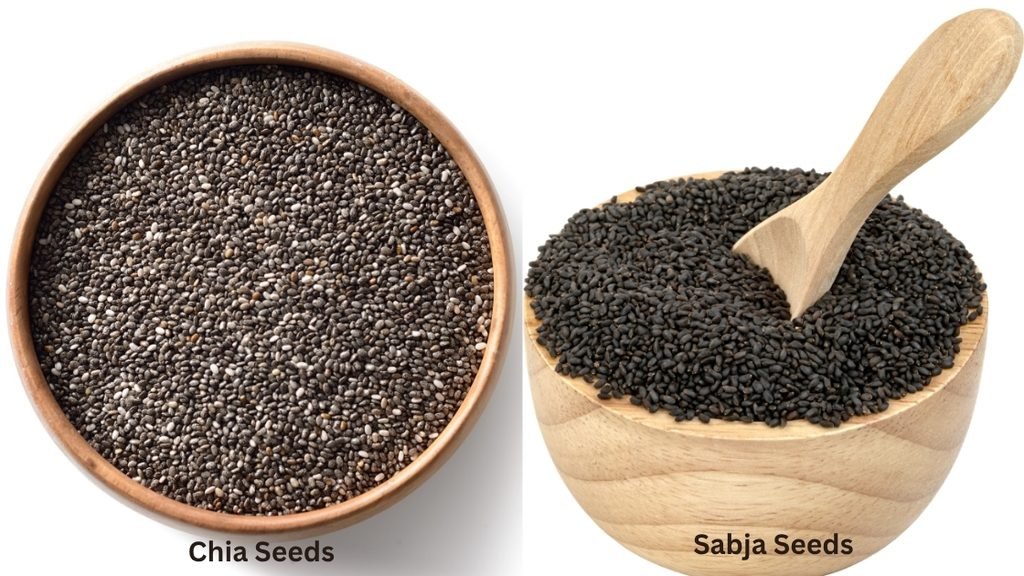
What Are Chia and Sabja Seeds?
Chia seeds come from a flowering plant native to Mexico and Guatemala, and have become a global health-food staple over the past decade. Sabja or sweet basil seeds come from the same basil family used in Indian and Southeast Asian cooking and have a much longer history in South Asian kitchens. Both seeds swell up and turn gel-like when soaked in liquid, which is why they’re used interchangeably in drinks and desserts.
Where This Fits in Indian Food Culture
Sabja seeds have long been part of Indian summer traditions, stirred into falooda, sherbet, and rose milk to cool the body during hot months. Chia, on the other hand, entered Indian kitchens mostly through the health and fitness world, showing up in smoothie bowls, puddings, and protein-focused recipes. Today the two often sit side by side on the same grocery shelf, each carrying a different cultural story.
The Real Benefits
- Chia seeds are higher in omega-3 fatty acids and protein, making them a stronger choice for plant-based protein and heart health.
- Sabja seeds are particularly good for cooling the body and supporting digestion, which is why they’re traditionally used in summer drinks.
- Both seeds are rich in fiber, which supports gut health and helps you feel fuller for longer.
- Sabja is generally more affordable and widely available in Indian kitchens, while chia often costs more as an imported or packaged product.
- Neither seed has significant flavor of its own, so both adapt easily to sweet or savory preparations without overpowering a dish.
How to Use Them
- Soak either seed in water, milk, or juice for 15-20 minutes before use, until they turn gel-like.
- Add chia to smoothies, overnight oats, or homemade energy bars for a protein and fiber boost.
- Stir sabja into nimbu pani, falooda, or fruit bowls for a cooling summer treat.
- Start with 1-2 teaspoons per serving for either seed, since both expand significantly and a little goes a long way.
- Store both in an airtight container in a cool, dry place to keep them fresh for months.
So, Which One Wins?
Honestly, it’s not really a competition. The two seeds are good at different things. If you’re looking for a protein and omega-3 boost, chia is the stronger pick. If you want something cooling, traditional, and budget-friendly for Indian summers, sabja is hard to beat. Many Indian kitchens are now happy to keep both on the shelf, using chia in modern breakfast bowls and sabja in classic drinks and desserts.
There’s no need to pick a side permanently. Rotate between the two based on the season, the dish and what’s easily available.