
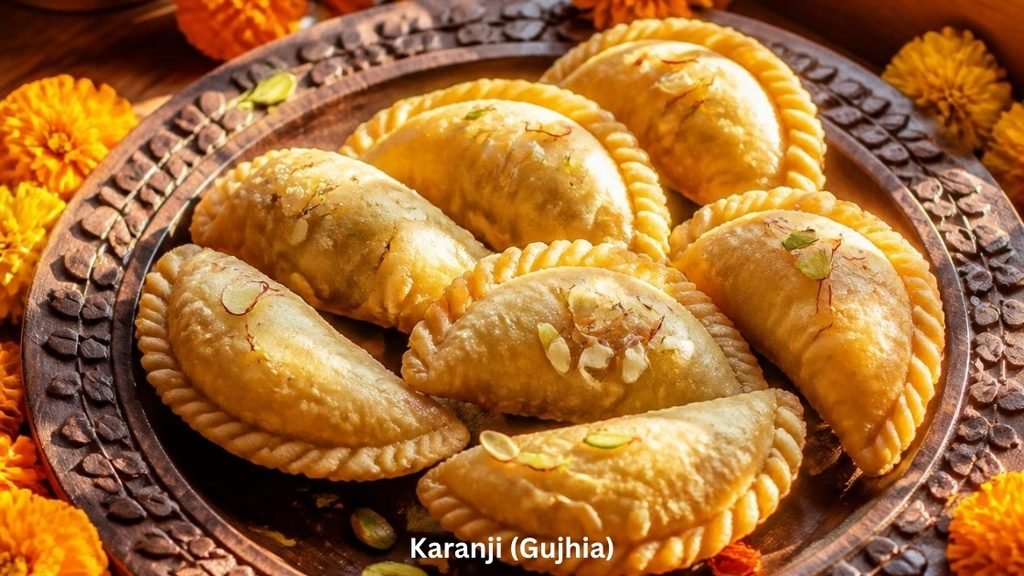
What is Karanji?
Karanji is a deep-fried Maharashtrian sweet made of a thin wheat-flour or maida shell stuffed with a rich filling of grated coconut, jaggery or sugar, and roasted dry fruits. It is then sealed into a crescent shape and fried until golden and crisp. It’s a close cousin of the North Indian gujiya and the Andhra kajjikayalu, all built on the same idea: a crisp shell wrapped around a sweet, nutty filling.
Where Karanji Comes From
Karanji has been a staple of Maharashtrian festive kitchens for generations, especially around Ganesh Chaturthi, Diwali and Sankranti, when it’s made in large batches to share with family and offer as prasad. Different regions have their own name and version of the same dumpling: gujiya in Uttar Pradesh and Rajasthan, karjikayi in Karnataka, and kajjikayalu in Andhra Pradesh and Telangana, each with slight variations in filling and shape. In most Maharashtrian homes, no Ganpati celebration is considered complete without a plate of karanji sitting next to the modak.
Health Benefits of Coconut
Coconut, the star of the karanji filling, brings more to the table than flavor.
- It’s rich in medium-chain triglycerides (MCTs), a type of fat the body converts into quick, usable energy rather than storing.
- Coconut contains lauric acid, which has natural antimicrobial properties.
- It’s a good source of manganese and copper, both important for bone health and metabolism.
- The fiber in fresh coconut supports digestion, which helps balance out an otherwise indulgent, fried sweet.
Ingredients:
- 2 cups all-purpose flour (maida) or whole wheat flour
- 2 tablespoons ghee or oil, for the dough
- A pinch of salt
- Water, as needed, to knead
- 1.5 cups fresh grated coconut (or dried desiccated coconut)
- 3/4 cup jaggery, grated (or sugar)
- 2 tablespoons poppy seeds (khus khus), roasted
- 2 tablespoons chopped cashews and raisins
- 1/2 teaspoon cardamom powder
- Oil or ghee, for deep frying
Instructions:
Step 1: Make the dough
Mix the flour, salt, and ghee together until it resembles coarse breadcrumbs. Add water gradually and knead into a stiff, smooth dough. Cover and rest for 20-30 minutes.
Step 2: Prepare the filling
In a dry pan, roast the grated coconut on low heat until it turns light golden and fragrant, about 5-6 minutes. Add the jaggery and cook until it melts and coats the coconut, then stir in poppy seeds, cashews, raisins, and cardamom powder. Cool completely before using, since a warm filling will melt the dough.
Step 3: Shape the karanji
Roll the dough into small discs, about 3-4 inches wide. Place a spoonful of the cooled filling in the center, fold into a half-moon, and seal the edges firmly with a little water or milk. Crimp the edges with a fork or a karanji cutter for a decorative finish.
Step 4: Fry until golden
Heat oil or ghee in a deep pan on medium heat. Fry the karanji in small batches, turning occasionally, until they turn an even golden brown, about 4-5 minutes per batch. Drain on paper towels and cool before storing.
Tips:
Keep the oil on medium heat rather than high, since karanji needs to cook through slowly so the shell turns crisp without browning too fast on the outside. Always let the filling cool completely before stuffing, and seal the edges well so they don’t burst open while frying. If you’re short on time, baking the karanji at 180°C for 20-25 minutes, brushed with ghee, is a lighter alternative to frying.
Preparation Time:
45 minutes prep plus 20 minutes frying. Makes about 20-25 karanji.
Common Mistakes:
- Using warm filling, which softens the dough and causes tears
- Not sealing the edges tightly, so the filling leaks out during frying
- Frying on very high heat, which browns the shell before the inside cooks through
Substitutions:
Swap maida for whole wheat flour for a slightly heartier shell, or use dried desiccated coconut when fresh coconut isn’t available. Sugar can replace jaggery for a lighter color and sweetness, and any combination of nuts you have on hand works well in the filling.
Storage and Reheating:
Karanji keeps well in an airtight container at room temperature for 7-10 days, or up to 3 weeks refrigerated. Since they’re fried, there’s no need to reheat them, though a few minutes in a warm oven can freshen them up if needed.
What to Serve With It:
Karanji is typically served as part of a festive sweet platter alongside modak and ladoo, with a warm cup of masala chai or filter coffee on the side.
Frequently Asked Questions:
Can I make karanji ahead of time?
Yes, they store well for over a week, making them ideal to prepare a few days before Ganesh Chaturthi.
Why did my karanji turn out chewy instead of crisp?
This usually happens when the dough is over-kneaded or the oil wasn’t hot enough when frying.
Can I bake instead of fry karanji?
Yes, though the texture will be slightly less crisp. Brush generously with ghee before baking for the best result.
Nutrition Information (per piece, approximate):
Calories: 120-140 kcal | Carbohydrates: 16g | Fat: 6g | Protein: 2g | Fiber: 1g