
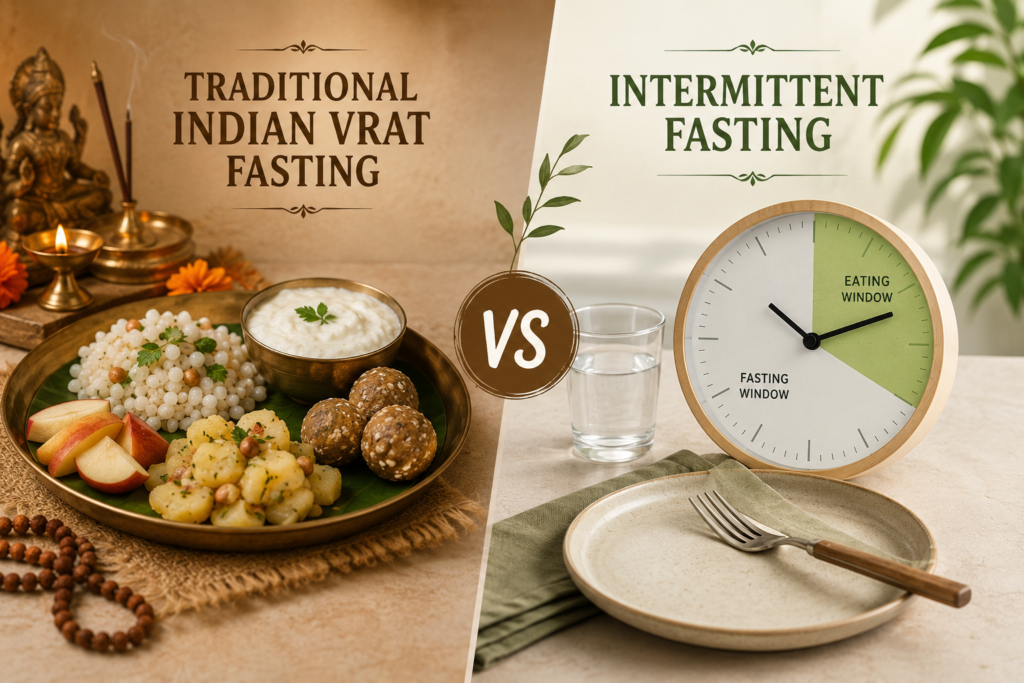
Turns Out, We’ve Been “Biohacking” Since Before It Had a Name
Intermittent fasting has taken over wellness conversations globally over the last several years, framed as a cutting-edge approach to weight management and metabolic health. Meanwhile, in most Indian households, someone has been observing a vrat (fast) on Ekadashi, Navratri, or a weekly day dedicated to a particular deity, for as long as anyone can remember. It’s worth looking at how these two things actually relate to each other.
The Roots of Vrat and Upvaas
Fasting in Indian tradition goes back thousands of years, deeply tied to religious and spiritual practice rather than weight loss. Different communities and regions observe different fasting days like Ekadashi fasts in the Vaishnav tradition, Navratri fasting across much of North India, Karva Chauth, Sawan Mondays, Friday fasts for Santoshi Maa, and many more, each with its own customs around what can and can’t be eaten.
Traditional vrat fasting is rarely a complete fast in the way modern intermittent fasting sometimes is. Most vrat allow specific foods like fruits, milk, sabudana, singhare ka atta (water chestnut flour), rajgira (amaranth), and rock salt (sendha namak) instead of regular salt, while avoiding grains, lentils, and regular table salt. The purpose was as much spiritual discipline and detoxification from everyday heavy food as it was about any measurable health metric.
How Intermittent Fasting Entered the Conversation
Intermittent fasting, as it’s discussed in modern fitness and nutrition circles, is a structured eating pattern commonly 16:8 (eating within an 8-hour window, fasting for 16), or other variations designed primarily around metabolic and weight management goals, backed by a growing body of Western clinical research on insulin sensitivity, autophagy, and calorie regulation.
When this concept entered mainstream Indian conversation over the last decade, largely through fitness influencers and international wellness trends, a lot of people didn’t realise they’d essentially grown up around a version of it, minus the branding. The core idea giving your digestive system a defined break isn’t new to Indian households; it just wasn’t framed in terms of “eating windows” and metabolic markers.
Where They Actually Overlap, and Where They Differ
The overlap is real: both practices involve deliberately restricting food intake for a defined period, both are believed to support digestion, and both can create a natural calorie deficit if not compensated for by overeating during the eating window. Traditional vrat, particularly the milk-and-fruit-only versions, share real similarities with certain modern fasting-mimicking approaches.
The difference is in intent and structure. Vrat fasting is usually occasional – weekly, monthly, or tied to specific festivals rather than a daily routine, and it’s rooted in spiritual observance first, health benefit second (even if the health benefit is real). Intermittent fasting, as practiced in fitness culture, is typically a daily or near-daily structured pattern focused specifically on metabolic outcomes.
The Benefits, Honestly Assessed
- Both approaches can give the digestive system a genuine rest period, which some research links to improved insulin sensitivity and digestive comfort.
- Traditional vrat foods like sabudana, singhare ka atta, and fruit provide a different nutrient profile than regular meals, offering the body a break from heavier grains and legumes.
- The mental and spiritual discipline component of vrat fasting, distinct from IF, has its own value for many people, offering structure and intention that’s harder to quantify but genuinely felt.
- Both, done carelessly, can backfire. Overeating fried sabudana vada during a vrat, or binge-eating during an IF eating window, cancels out much of the intended benefit.
Fasting Sensibly, Whichever Version You Choose
This is really where most people go wrong with either practice. A vrat day spent eating multiple plates of deep-fried sabudana vada and aloo isn’t meaningfully different, calorie or health-wise, from a regular heavy eating day – it’s just fried food eaten within fasting rules rather than outside them. Similarly, intermittent fasting doesn’t work as a health strategy if the eating window is filled with processed, calorie-dense food just because “it’s allowed.”
If you’re drawn to fasting, whether for tradition, spiritual reasons, or general wellness, the sensible approach looks similar either way: keep the food eaten during your fasting period simple and whole like fruit, milk, nuts, light preparations rather than treating it as an excuse for indulgence. And if you have any underlying health condition, particularly diabetes or low blood pressure, check with a doctor before adopting either an extended fasting window or frequent vrat, since fasting isn’t universally safe for everyone.
A Practice That Never Really Left
Maybe the most interesting part of the whole intermittent fasting trend, from an Indian lens, is realising it isn’t really a new idea being imported it’s an old idea being re-explained with modern research and a catchier name. The Ekadashi fast your grandmother has kept for forty years was never behind the times. It just didn’t need a hashtag.