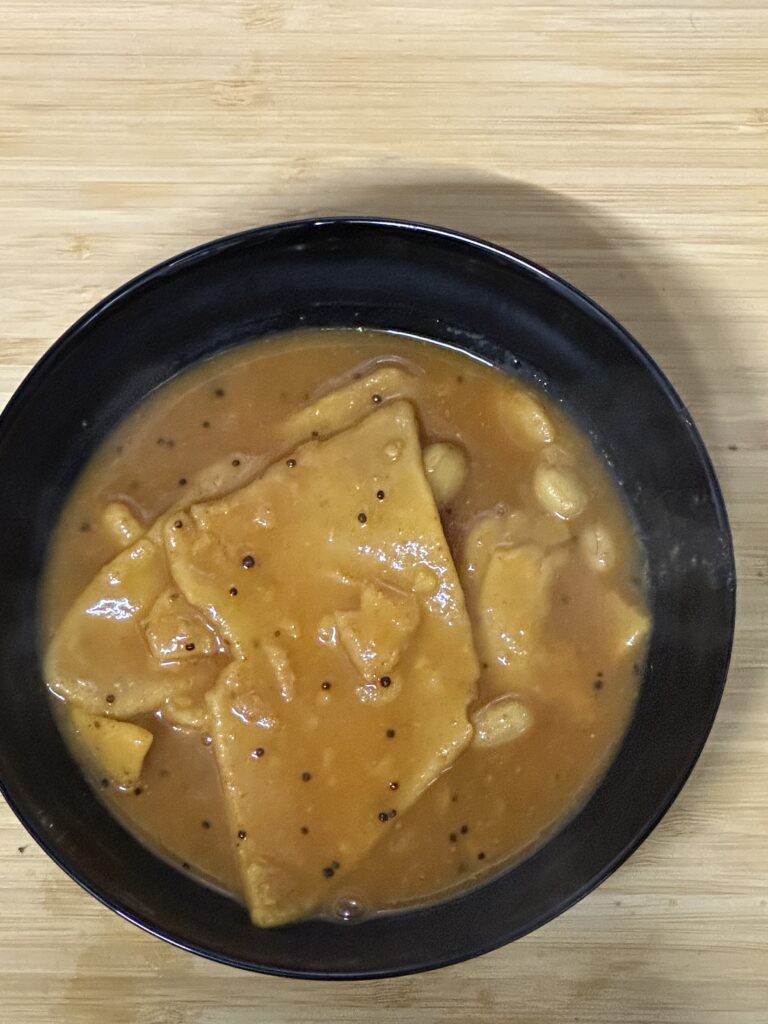
Dal Dhokli is a traditional Gujarati dish and is popular across Gujarat, India. It is commonly prepared in Gujarati households and also served in restaurants specialising in Gujarati cuisine.
Ingredients:
For Dal (Lentil Soup)
- 1 cup tuvar dal (pigeon peas lentils), washed
- 1 tomato, finely chopped
- 1 teaspoon mustard seeds
- 1/2 teaspoon turmeric powder
- 2 teaspoon red chilli powder
- 1/2 teaspoon coriander powder
- Salt to taste
- 2 tablespoon oil
- Water, as needed
- Fresh coriander leaves for garnish (optional)
- 1/2 lemon (optional)
- 1 teaspoon ghee (optional)
- 4 teaspoon jaggery
- 1/2 cup peanuts / Shengdana
For Dhokli (Wheat Flour Dumplings):
- 1 cup wheat flour
- 1/2 teaspoon turmeric powder
- 1 teaspoon carom seeds (Ajwain)
- 1 teaspoon red chilli powder
- Salt to taste
- Water, as needed
- 1 tablespoon oil
- 6-7 curry leaves
Instructions:
- Add 1 cup tuvar dal and 2 cups water in a pressure cooker. Add 1/4 teaspoon turmeric and close the pressure cooker lid. Cook until dal is soft and properly cooked. It will take about 3-4 whistles.
- Once the pressure releases, open the cooker, and check the consistency of dal. Keep it aside
Prepare dhokli (Wheat Flour Dumplings):
- In a mixing bowl add wheat flour, turmeric powder, red chilli powder, salt, and oil.
- Gradually add water and knead into a smooth dough. Let it rest for 10-15 minutes.
- Divide the dough into small lemon-sized balls. Roll out each ball into thin roti shape and cut it into diamond or square shapes.
Prepare dal
- In a big pan/ use the same pressure cooker in which we cooked the dal – Add 3 glass water with the cooked dal
- Once the water starts to heat add all the spices – Curry leaves, Turmeric powder, Red chilli powder, Coriander powder, Jaggery, chopped tomato, Peanuts and salt to taste
- mix everything well and let it boil.
- after 5-7 minutes start adding the dhokli pieces in it
- Now mix it well to avoid any lumps and keep stirring it continuously.
- Taste in between for adjusting the spices as per your preference.
- it should take about 20- 25 minutes for the dhokli to completely cook. Check if it’s cooked
- Once it’s cooked you can add chopped coriander and 1/2 lemon (This step is optional)
- Dal dhokli is ready to serve. You can eat it alone or with rice.
Health Benefits of eating Dal Dhokli
- High in Protein: Tuvar dal is rich in protein, essential for muscle repair and growth.
- Good Source of Fiber: Lentils are high in dietary fiber, helps in digestion and promotes gut health.
- Nutrient-Rich: Dal Dhokli dish is packed with essential vitamins and minerals from lentils, tomatoes and spices, supporting overall health and well-being.
- Balanced Meal: Dal Dhokli is a balanced meal combining lentils, wheat flour and tomatoes providing energy and essential nutrients for the body.
Few Tips:
- Ensure the dhokli pieces are thin and evenly rolled out to ensure uniform cooking.
- Adjust the spice levels according to your taste preference.
- For a richer flavour, drizzle ghee over the dal dhokli before serving.
- Serve hot for the best taste and experience.
Gujarati dal dhokli has its roots in Gujarati cuisine, where it has been prepared for generations as a comforting and wholesome meal. Similar dishes include Rajasthan’s Dal Baati Churma, which also combines lentils with wheat flour dumplings but has its unique flavours and preparation method. In Maharashtra, Varan Phal is a close relative, where lentils are served with soft wheat flour noodles called phal. Each dish has its distinct taste, reflecting the culinary diversity of India.
More Recipes:

Health Benefits of Rajgira (Amaranth): The Navratri Vrat Superfood NASA Once Studied
What is Rajgira? Rajgira, also called ramdana or chaulai in Hindi, is amaranth, a small, protein-rich pseudo-grain that’s technically a seed rather than a true

Why Cooking in an Iron Kadai Can Help : The Science of Iron Cookware
Why Iron Cookware Matters Cooking food in a cast iron kadai or pan causes small amounts of iron to leach into the food, particularly when

Diabetes-Friendly Indian Vegetarian Foods: A Practical Everyday Guide
Every Indian household has that one relative who was told by the doctor to “cut down on sugar and rice” and suddenly panicked about what’s

The Science of Sour: How Tamarind, Kokum and Amchur Balance Every Indian Dish
Ask any home cook what makes a sambar taste right, or a kokum curry from the Konkan coast sing, and they’ll usually point to one

The Science of Food Combining in Ayurveda (Viruddha Ahara): Why Some Combinations Upset Your Stomach
What is Viruddha Ahara? Viruddha ahara literally translates to “incompatible food” in Ayurveda. It refers to combinations of foods that, when eaten together, are believed

Navratri Vrat Diet Guide: What to Eat and Avoid During the Nine-Day Fast
Every year around Navratri, Most of Indian family kitchens quietly transform: no onion, no garlic, no regular wheat flour, and suddenly sabudana and singhara atta

Health Benefits of Sesame Seeds (Til): India’s Winter-Warming Superseed
Walk into any Indian kitchen in the weeks leading up to Makar Sankranti and you’ll find a tin of til quietly waiting to be turned

Health Benefits of Garlic (Lehsun): India’s Everyday Immunity Spice
Walk into almost any Indian kitchen at dinnertime and you’ll catch that first unmistakable sizzle of garlic hitting hot oil. It’s such a routine sound

The Science of Resting Roti Dough: Why It Makes Softer Flatbreads
Every Indian home cook has heard some version of “rest the dough before rolling,” usually passed down without much explanation. It sounds like a small

Health Benefits of Ginger (Adrak): India’s Everyday Immunity Spice
Almost every Indian kitchen has a knob of ginger sitting on the counter, ready to be grated into chai the moment someone sneezes. It’s one

Health Benefits of Asafoetida (Hing): India’s Pungent Digestive Spice
A tiny pinch of hing dropped into hot ghee before it hits the dal is one of those small kitchen rituals that instantly signals “this

Health Benefits of Bajra (Pearl Millet): India’s Iron-Rich Winter Grain
What is Bajra? Bajra, known in English as pearl millet, is one of the oldest cultivated grains in India. It’s a small, round millet that’s

Health Benefits of Mustard Oil (Sarson ka Tel): India’s Traditional Cooking Fat
My mother still keeps two bottles of oil next to the stove, one refined and one mustard, and she reaches for the mustard one whenever

Health Benefits of Sabja (Basil) Seeds: India’s Cooling Monsoon Superseed
The first time I saw sabja seeds, I thought someone had dropped fish eggs into my falooda. My aunt laughed and told me they were